Sunday, August 18, 2013

IFLA 2013: My Day-One #wlic2013

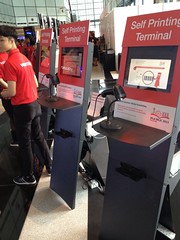
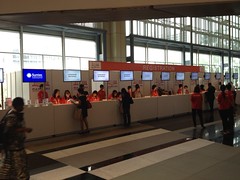
Registration was a breeze. I'm wasn't sure if that was a setup particular to the conference venue (Suntec Convention & Exhibition Centre). After registering, I just had one more step to do, which was to collect...
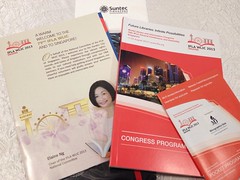
IFLA World Library & Information Conference 2013 IFLA World Library & Information Conference 2013 IFLA World Library & Information Conference 2013

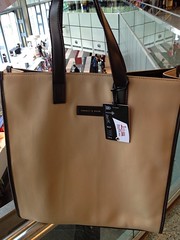
...the official conference bag. Didn't look like the typical conference bag, did it? The only outward sign was a luggage tag with the conference logo. That was removable. The bag was sponsored by a home-grown fashion company, Charles & Keith.  I tweeted that it was probably the most talked-about conference bag in IFLA's history. I felt rather metrosexual carrying the bag around. Not complaining though.
IFLA World Library & Information Conference 2013

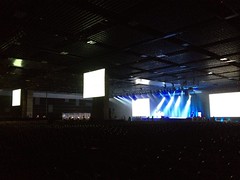
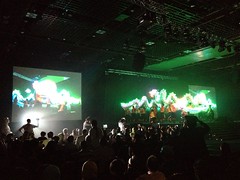
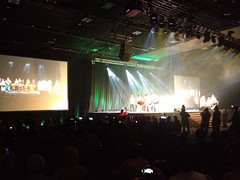
The conference venue was a large one. Had to be. We were later told there were 3,500 delegates from 120 countries attending the conference.
IFLA World Library & Information Conference 2013

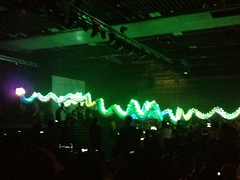
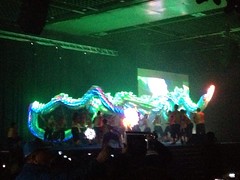
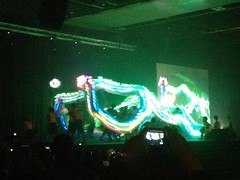
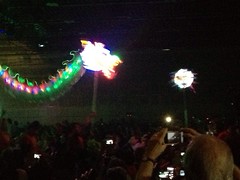
The opening ceremony opened with a Dragon Dance, featuring a souped up dragon in neon electric lights. I've seen plenty of Dragon Dances but never one with a jazzed up dragon like this. Two thumbs up.
IFLA World Library & Information Conference 2013 IFLA World Library & Information Conference 2013 IFLA World Library & Information Conference 2013 IFLA World Library & Information Conference 2013
IFLA World Library & Information Conference 2013 IFLA World Library & Information Conference 2013

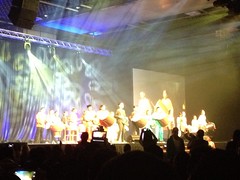
Next came a Malay-Chinese-Indian drums routine, ending with a short Lion Dance. If I was told of such a routine without having watched it, I would have thought it a cliche. But it didn't feel that way. In the context of an event involving participants from all parts of the world, such a symbolic display of racial integration was quite appropriate (it's more than mere symbolism though; go read Bertha Henson's brilliant piece on what it means to be "in Singapore").
IFLA World Library & Information Conference 2013 IFLA World Library & Information Conference 2013 IFLA World Library & Information Conference 2013 IFLA World Library & Information Conference 2013 IFLA World Library & Information Conference 2013

The speeches began next.

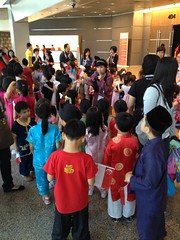
I had to step out of the for a while. Saw a group of children preparing for the next routine.
IFLA World Library & Information Conference 2013 IFLA World Library & Information Conference 2013

There's something special about a gathering of like-minded people. You just had to be there.

I thought the conference was off to a great start.

IFLA World Library & Information Conference 2013

Wednesday, August 14, 2013

IFLA 2013: Some links to help the first-time visitor to Singapore #wlic2013

The last time I blogged about IFLA 2013 was almost two years ago.

So it's finally here.

If you're like me, attending an event in an unfamiliar country, you would have questions like "How do I get around?", "Where to buy food?", "How much should I budget on a daily basis?", or "What to wear?"

And, if you also procrastinate like me, you might not bother to find out about local information until the very last minute. But then you might not do so because because your presentation is still not fully done and you're deep into panic mode LOL.

So I thought to share quick links to practical information, for the last minute prep.

General practical information
The LonelyPlanet site has practical information. I like Frommer's better, as it has more details. I didn't verify all information on prices but the amounts wouldn't change that drastically. At the very least, you should know there's a cost.


Power socket and supply
Singapore uses the 'Type G' British design. A universal adaptor socket would usually do the trick. The voltage is 220-240 volts, so you might want to check your equipment specs. Although I've never heard of any overseas visitors having their gadgets being fried by plugging in.


Internet Access
Most hotels should have WIFI. I'm not too sure if it's all free. There's always Starbucks and MacDonalds.


Maps: websites and apps
I recommend Gothere.sg. As a local, I use it myself. The site loads fast. I've found the information reliable. You can find out how to walk to places, in addition to taking the MRT system, public buses, taxis and private cars.

If you have an iPhone, you can consider the free Singapore Maps app from Apple Store.

This is the map of the MRT, i.e. public train system.


Weather
I refer to this site (from the National Environment Agency) all the time. You'll probably be staying in a hotel near the conference venue, so look for the square box that says "city".


Public toilets
Vast majority are free to use. You can find them in shopping malls. Plenty of public toilets, in reasonably clean condition, within walking distance.


Customs
I'm pretty sure librarians and information professionals will find they aren't going worry about the prohibited stuff (scroll to the bottom of this page). Information on this page, from the Singapore Customs, would also be useful.


-----

Singapore is a tourist-friendly place. I dare say most delegates can get by for the duration of the conference without too much planning. If you have your plane tickets, passport, credit card and some cash, you're good to go.

Oh, don't forget to bring a copy of your IFLA conference confirmation email. You would also have checked out the official IFLA WILC 2013 site.


The last time I attended a IFLA conference (more accurately, the IFLA World Library and Information Congress) was five years ago, in 2008. Had the privilege of attending IFLA in the years I served as the Information Officer for the Libraries for Children and Young Adults Section.

Preparing for a conference trip can often have anxiety-filled moments. I hope this post would be of some help.

See you at the conference.

Logo: IFLA World Library and Information Congress  79th IFLA General Conference and Assembly

Sunday, August 11, 2013

Interview with a Contemporary Fusion musician: Tze

2011 Results - The UK Songwriting ContestSome years back, I got to know a Singaporean musician and composer from a songwriting meetup. Back then, I didn't really know what he did. But he seemed to know a lot about music.

Then I gradually found out that Tze Toh (or Tze, as he likes people to call him), was an award-winning composer (first prize in the 2011 UK Songwriting contest, Instrumental category).

2011 Results - The UK Songwriting Contest

In one of our occasional online conversation, he shared a long term vision of forming his own orchestra. Pretty grand goals and it sounded immensely difficult.

It wasn't all talk and no action.

Last year, he put up a concert. With an ensemble!

I bought a ticket and spent an enjoyable evening, at a musical show that was thoughtfully put together. Tze's music is a blend of jazz, with the piano and/ or asian-based instruments as centrepieces. That's my interpretation anyway.

Tze calls his music "contemporary fusion" with a blend of "film score, jazz, Indian, Chinese and European classical music". If you've not heard his music before, here's a taster from his 2012 "Tze n Looking Glass: Return to wonderland" trailer video:


Since his ensemble concert last year, Tze has put up one more show in early 2013. He's pretty prolific, for his third show is coming up just a few weeks from now, in September 2013.

He agreed to an email interview, so here it is:

Q: Fusion Jazz isn't entirely new. So what's unique about your music?
The orchestra improvises as well. So each musician infuses their own vision and ideas. I feel that is the one truly unique thing about our orchestra - an ensemble where everyone has a his/her own voice.

[Ivan here: Folks, I'll let that sink in -- an ensemble that improvises. Not easy!]


Q: What sort of audience would you like to have at your concert?
I think our music have a broad appeal - from fans of jazz, classical, film music, world music (even some Jay-chou fans and people who don't usually listen to music!). We would like to have people who want to truly experience a journey, and listen to our stories. We always hope that the audience takes something home with them after the concert, hopefully a bit of inspiration, a smile, or a positive feeling that life is beautiful and will get better


Q: For someone new to your work, can you give them a flavour of what to expect at your show?
Here's a 28min recording of highlights from the "Wonderland 2012" Concert

[Ivan here: One of my favourite songs from Tze's 2012 concert were the ones with the Indian Raga flavour, like this one that starts from 4min 17sec]


Q: What would you say to someone who ask, "Why should I attend?"
Haha. Because you may hear something not often heard. Different musical languages -- be it Jazz, Classical or Asian traditional sounds -- coming together to create new tapestries and soundscapes. Like how the Indian violin blends with bebop jazz saxophone like the coming of rain; the entire orchestra improvising collectively to sound like a forest coming alive; the acoustic bass sounding like a growling mythical giant that grows and pushes Heaven and Earth apart.


Q: What goes on in your mind each time you prepare for a concert.
There's a lot of thought that goes into the conceptualization of each concert. I think the big question is always, "Why?".

Why are we doing this concert, and why are we writing and creating this new music?

Then comes the questions of "What do we want to explore and say with this music"? And "How do we say it?"; how to express what we want to using the instruments, melodies, harmonies, scales, sounds etc.

There's many aspects to concert preparation, whether it's the technical, or the mental. Technical issues are straight-forward to solve, e.g. playing and rehearsing, working on details of music, but the mental side is tricky sometimes, because you need the musicians to understand what the concert/music is about, and to understand where it all comes from, in order to realise your vision. Often to understand something in depth, one needs to have gain certain experiences in life and it's hard sometimes, for say, younger musicians, concerning certain themes and issues.


Q: What goes on after?
Usually after concerts, there's the (self) evaluation part, and some sort of celebration :) But mostly it's about just taking our minds off the music. It's intense, preparing for a concert. Because you eat, sleep and breath the music for a month or two. Your mind is never away from the music - always thinking, conceptualizing every day, while you are taking the bus/train, walking, having meals etc. The mind doesn't stop working. So after the concert you have to slow down gradually for a week, up to a month, before your brain learns to relax again.


Q: Your shows are often accompanied by write-ups that describe the concepts behind your work. What's your musical philosophy?
I think it's important for every concert to have an essence. For me, each concert is about discovering something. There is something inside of us that we often need to express, discover/ re-discover. I think music itself is a very interesting way of looking at the world around us, and also discovering what it means to be a sentient being; what humanity means. The expression of music itself is our way of sharing with the audience how we connect with the world around us. And how as musicians we connect with each other, to create this bond and special "place/journey".

Every imagery, idea in your head has its musical equivalent. I see myself as a sonic painter, creating each piece as a means for audience to experience this world which I imagined.


Q: Tell us more about your coming concert in Sept 2013.
In this upcoming concert, "The Longest Dream", we explore our perceptions of time/space, reality and dreams. Much of the music is inspired by Asian mythologies of creation like Pan Gu (盘古), as well as breakthroughs in Quantum physics like the discovery of the Higgs Boson. I think it's fascinating how science, mythology and philosophy have common themes.

It features original music that I wrote, with new works inspired by the music of Ryuichi Sakamoto, Ennio Morricone, Keith Jarrett quartet, E.S.T trio, Ravel and Debussy.
The Longest Dream - 2013 concert poster

The concert will feature the following soloists: Lazar T.Sebastine (Indian violin), Teo Boon Chye (saxophone), Joyce Poh (Chinese flute), Julian Li Yongrui (acoustic bass), Wendy Phua (e.bass), Thirunalini Balakumaran (dance).

Audience can have a post-show dialogue with the artists after the concert.

----------

The concert is on 5 Sept 2013, 7.30pm, at the Esplanade Recital Studio. If you're interested in tickets, they are priced at $30 each. Tze says there's a package price of $90 for a set of four tickets. Students get concessions prices at $18. There's an Early Bird price of $25 if you buy before 12th Aug 2013.

Tickets are at www.ticketmash.sg/thelongestdream (note: A TICKETMASH booking fee applies for each ticket. Latecomers will only be admitted at suitable breaks. No admission of infant-in-arms and children below 6 years).

[UPDATE: Tze tells me tickets are also on sale on the day itself, outside the recital studio]

You can find out more about Tze and his orchestra at these pages:
Facebook: www.facebook.com/tzetoh
Official site: www.TLGOsingapore.com

Tze can be reached at tze.music@gmail.com. I'm sure he would love to know what you think of his show.

p.s. I'm asking a few friends if they want to attend this show with me.

Tuesday, August 06, 2013

The launch of "Hands: Gift of a Generation" exhibition, 6 Aug 2013

Several of my colleagues at the National Library have been hard at work for the past few months, working towards this exhibition. The appointed exhibition vendor started the onsite set up slightly more than a week ago. It all came together for today's official launch (6 Aug 2013) of the "Hands: Gift of a Generation" exhibition.

IMG_5722 Hands exhibtion

IMG_5723 hands exhibition IMG_5694 launch

The two old couple were guests. I was told each was over 100 years old. The woman was featured in the exhibition's Gallery. More about her later.
IMG_5685 registration

IMG_5711 launch


The Gallery
There were 30 Singaporeans specially interviewed for the Gallery. Having lived through the nation-building years (generally taken as 1965 to 1970s), their individual memories had the touch of familiarity and distance all combined. My colleagues did a nice job shortlisting the interviewees. A few interviewees have achieved national fame at some point. But most are ordinary folks, in the sense they could have been our parents or grandparents. Or you and I. 
IMG_5686 the gallery IMG_5703 gallery IMG_5689 Hands Exhibition IMG_5706 gallery IMG_5697


Here's the old couple I mentioned at the start of the post. The old woman was Madam Lim Beak. With her was her husband. I was told both were Centenarians. They looked amazingly fit for their age.
IMG_5701 lim beak IMG_5700 lim beak

Reading her story, I learned that both Madam Lim and her husband were natives of Fujian, China. Madam Lim was born in 1908 and came to Singapore when she was 34 years old (around 1942). Her husband had come to Singapore years earlier, in 1939, to escape conscription (into the Nationalist army, I suppose). It was fascinating to read how she and her husband went about making a living in those early days in Singapore. Sounded like tough times. 
IMG_5751 lim beak

More of her story will appear in the papers soon, I think. She was interviewed by journalists who were at  the launch.


The Remembering Room
This was the central structure of the whole exhibit. If you have contributed your stories to SingaporeMemory.Sg, you might find yours being projected on the wall.
IMG_5707  remembering room

Visitors could tap on the lightbox interfaces to search and browse memories, drawn from what has been contributed to the Singapore Memory Project so far.
IMG_5692 remembering room IMG_5691 the remembering room

IMG_5693 remembering room


The Memory Table
IMG_5699 memory table IMG_5698 memory table

That was the area where you write your memories down (on a sheet provided), then walk over to the scanner to digitise the sheet. The scanner was activated by placing your hand over the surface.
IMG_5725 memory table


The Memory Recorder
For those who wish to contribute their memories via video or audio, check out the Memory Recorder. It's an enclosed space where you can record yourself or interview a friend.
IMG_5687 the memory recorder IMG_5702 memory recorder


The Memory Pool
IMG_5743 memory pool

This part was designed with the kids in mind. On the walls were mobile phone-sized touchscreens, where visitors could digitally pen or sketch something. Submitting the memory was a matter of covering up the touchscreen with your hand.
IMG_5714  the memory pool IMG_5696 the memory pool

Then the 'memories' will appear in the 'light pool'. You could try scooping up whatever that has been submitted with your hands to take a closer look.
IMG_5716  the memory pool IMG_5695  the memory pool


Mementos for guests
Guests received a programme brochure and also a special edition Kalkitos game.
IMG_5708 launch IMG_5709 launch IMG_5710 launch

IMG_5732 launch

IMG_5705 launch

The exhibition, organised by the Singapore Memory Project, would be open to the public on 7 Aug. It would be on till 13 Aug 2013 at The Plaza, National Library building. There would also be programmes organised in conjunction with the exhibition.

IMG_5738 Hands Exhibition

IMG_5688 main Hands

Thursday, July 25, 2013

Book review: Love! Live Dangerously! And Have Fun!: a mother's lessons on love, hope, loss and the gifts of life

This one came in the mail for me to review. The book, targeted at young female readers, was easy to read. The tone and style was very personable.

Book review: Love! Live Dangerously! And Have Fun!: a mother's lessons on love, hope, loss and the gifts of life
Cover from: catherinekhoo.wordpress.com. All Rights Reserved.

My take-away from the book:
Crap will happen to anyone and everyone, at some point. No one is immune. The difference is how we choose to carry on.

Taking risks doesn't always mean we will come up tops. But it also doesn't mean we will always fail.

Exercise compassion. Life is not just about 'me'.

Not entirely the way the author described, but I think not too far from it.

The author shared selective episodes from her life, explaining how she realised that one should love and take risks in life.

Right off the start, I sensed this was a woman who did not conform to conventional thinking, even as a teenager. Her mother had forbidden her to go on dates, and that the young Catherine should only focus on her studies. But she dated the boy anyway, even initiating the courtship rather than wait for him to act. The consequence was that her studies were affected, and so did the boy's.

Before you wonder what sort of message the author is imposing on young impressionable minds, the truth is that many of our friends (perhaps you and I) went through the same, in different degrees. There may be more 'teen rebels' among us than we care to acknowledge.

The key difference, I thought, was that a person like Catherine Khoo consistently applied her optimistic outlook towards life.

She wrote in another of her blog:
... I’ve lived this maxim since I was a teenager … and strange enough, it applies so much more as I grow older. Sure, sometimes I jump in without thinking of the consequences, and I fail, but how many times have I brushed off the blood and dust and moved on? Think of it this way, at least I figured out another way not to do it! Truth be told, though...I love this journey

Can we truly have a happy life just by living our dreams?

Cynics may say that there are those who have tried to do just that, and they end up being decrepit and miserable.

Perhaps in anticipation of that, the author peppers her anecdotes about seeing life optimistically.

Part of her credibility arose from her managing and growing her own business. I think it takes a feisty no-nonsense approach to do that, in addition to being a mother, a wife, and a daughter-in-law. If that's not enough, try starting a writing scheme for teens.

I did not think the author suggests that one should one up-end our lives and gallivant halfway around the world. You get a sense that risk-taking has to be tempered with an underlying sense of responsibility first.

Still, I would not have done some of the things she did, no matter what you tell me. For example, her episode with the illegal taxi ride in a foreign country, where she almost became a victim of a robbery. If I learnt my wife/ mother/ sister did just that (accept rides from strangers), I would be very, very angry. It seemed reckless.

For the most part, I empathised with her stories. Like how she walked out on her husband one time, feeling that she was being unfairly put down by her spouse. As a husband myself, it made me reflect on my words and deeds towards my wife.

One thing I felt the book fell short was that flow of the chapters can appear to be disjointed at times -- though this could be said to be the online-diary writing style. Also, I was left with the impression that there could have been a lot more interesting stuff to be told, but weren't.

I would have wanted to read more was her trials and tribulations in starting and sustaining the Young Authors Club, for one. What went through her mind when she was asked to set up the club? Did she see a business opportunity first, or the social cause?

So, here are a few things that I would be interested in reading, perhaps in her next book:
  • Stories, as told by other woman, whom she met along the way.
  • Interesting stories of the children and teens whom she have met, through the club she set up.
  • The challenges in running a business, never mind being a businesswoman.
  • What was it really like when she "shattered the traditional Japanese male enclave when she became the only woman editor-in-chief of two Japan-based magazines published in Singapore, a position she held for seven years" (see this).

Overall, this would make a good book discussion for teens. Or among teens and parents (I guess the teens would have to be forced to attend such a session, lol).

In a practical and pragmatic society like Singapore, some parents will not agree with the premise behind her book's title. The call to "love and live dangerously" was something that goes against conventional thinking when I was growing up, and in a way it's still very much the covert values most of us go by.

This was Catherine Khoo's fourth book. It is currently available at major bookstores here, like MPH, Kinokuniya, and Times Bookshop.

Her books are also available at the NLB libraries.

Catherine also blogs at www.catherinekhoo.sg/the-meaning-of-education.

Sunday, July 14, 2013

Interview with the artist/ writer: "Jack Doe: Anonymous"

[Earlier post: Graphic novel review - Jack Doe: Anonymous]

This post is two years late.

In 2011, after I blogged about the graphic novel, the author/ artist, Shawn Yap, found my post and left this comment:
Hi Ivan! Shawn Yap here! Thanks for the review and feedback! My team and I appreciate it alot! I do have a second book out though – “Closets” (unrelated to Jack Doe though), if you happen to read that, let me know what you think.

That led to an email correspondence, where Shawn agreed to an email interview. The interview took a while because Shawn was busy at that time. And then I got busy and procrastination took over. I never published the interview.

I kept his emails in my inbox as a reminder. This week I finally got off my procrastinating behind, went to Shawn's website to find out what he's been up to (he's got a Facebook page now), then got in touch with him again to ask if he had any updates.

He did. And here's the interview with 2013 updates:

Shawn Yap - www.shawnyap.net

[In 2011]
Q: How did 'Jack Doe' get started? I'm aware that it was part of the MDA First Time Publisher initiative. And that you had other collaborators like Gabriel Chua, Nathan Peng, Daniel Barrett Lee, Xander Lee, Regina Lee, Amanda Yap, Beryl Kwok.

It's quite a funny story actually. I had absolutely no idea of the First Time Publisher Initiative until my mother told me about it, after reading about it on the newspapers.

I was still serving my NS in the Navy at the time, and the deadline were about less than a week away, if I remember.

It was quite a rush to come up with a story for the pitch, so there was many stories I penned down and came up with while in camp. I ran the ideas through Daniel, who was my close friend from my BMT, and there was a lot of back and forth and eventually it led to "Jack Doe". I sent the draft out and we got the pitch.

From there I got a team to work on the project together with me: Daniel, of course; Gabe - who wrote most of the great script in the book; Nathan - who was a major blessing, script-wise, in the later chapters; Xander - who came up with the amazing cover concept; Regina, Beryl and my younger sister, Amanda, who provided help in the coloring/toning department for the covers and the main story.

2) Could you share some insights into the process of making "Jack Doe"? As a reader looking at the final product, I'm curious as to some of the thought processes and physical work involved.
Oh, it was a really long process!

But thankfully I wrote out most of the story before approaching Gabe, Nathan and Daniel with it, from there we had quite a lot of ideas and stuff thrown around to really spice up the story. The story evolved a little here and there while we were releasing it in issues, and that, while scary, was actually quite exciting because it still had room to grow and breathe.

The team hardly had time to meet altogether though, so it was always only 1 or 2 of us at a time.

The work itself, art-wise, was really one of the more taxing aspects of the book, due to deadlines and schedules. I was really thankful for the help I got from the colorists! I was really thankful for the prompt work on the script from the writers. Really helped to speed stuff up! :) I was also really grateful for the additional time given to improve on the trade paperback, there were quite a few improvements made from the story published in M.U.G.E.N.


3) I read from the blurb that Jack Doe contains six chapters published in M.U.G.E.N. I've to profess my ignorance about M.U.G.E.N. Isn't M.U.G.E.N a game? http://en.wikipedia.org/wiki/M.U.G.E.N

Ah...It is! Well...I mean it is both the name of a game and a comic anthology (and a car modification company as well if i'm not wrong). I think the publishers didnt realise that when they came up with the name, but I guess the association helped us a little (well it worked both ways, haha).


4) What was the easiest part in producing Jack Doe?

Revisiting and revising the story for its paperback launch. That was much easier because the bulk of the story was done, it was also the most fun part, for me at least.


5) What's the hardest?

Definitely the deadlines. Towards chapter 5 and 6 the deadlines were getting tighter and tighter and it was really, really crazy.


6) What are your collaborators doing now? i.e. Gabriel Chua, Nathan Peng, Daniel Barrett Lee, Xander Lee, Regina Lee, Amanda Yap, Beryl Kwok.
[Interviewer's note: this was in 2011] Most of them are working at the moment. We've hardly had time to meet up, sadly. They're all working different jobs at the moment - teaching, advertising etc, with the exception of Beryl and I, who are in the process of finishing up our University education.


You can view some of their works online as well! - Xander has a site full of great works at http://www.xanderlee.com/

7) What are you up to lately, work wise? (or your creative pursuits)
[Interviewer's note: this was in 2011] I published a 2nd book - Closets, about a year or 2 back. Apart from that I have been working on a few games. I had a card game "Crisis!" tested at Sporecon early in 2011, and perhaps 2012 too. I am currently working on a 3rd book, titled "Letters", which would probably see a release this year or the next, if all goes well, haha.

Apart from that I have been freelancing and updating my site - http://www.shawnyap.net - constantly with new works and old. So watch out for that! :)

I've also been working on some redesigns for comic book characters for leisure, which has been really fun as well.

8) Any other comments to add?

For those who have read the books - Thank you so much for your support! Feel free to let me know your thoughts and stuff, I'm always open to comments! Huge thank you to you, Ivan, as well for this interview! :)


[2013 July update]

9) Shawn, it's about two years later. How did those things you mentioned in the 2011 interview turn out?

"Closets" my 2nd book, had a limited print run and the reaction to it was really positive! It was my first time self-publishing so it was really scary. I had no idea how people were going to react to it, but I was so thankful that people liked it!

With my card game - "Crisis!" - the response to it at conventions thus far has been amazing and we are still looking to get it published. You know you've got something good when people are having fun playing it, so I'm really happy about that.

As for "Letters.", I am humbled and honored whenever I hear that the story has touched someone's life or that it was something they could relate to. It is really a story very close to my heart, and so to see people, no matter how many, get something out of it makes me really happy I shared it!


10) What keeps you busy these days?

Mainly my full-time job - i'm currently working as a game artist. Apart from that though, I've been doing commissions, fan art and attending the occasional event/convention - meeting fellow artists and art appreciators has been particularly mindblowing.

I published a new graphic novel - "Letters" (my 3rd and hopefully not the last book) digitally under ilovebooks.com, which unfortunately [the site] closed down recently. I am very close to finding a new home for the book, so watch out for it! This 3rd book really one of my proudest achievements to date and I really hope everyone will like it!

Apart from "Letters.", I am also looking to port my other 2 books - "Jack Doe" and "Closets" over digitally as well - to make it available worldwide.

Apart from that, I've been taking commissions and doing fan art whenever i can (it's great therapy!)

You can check out what i've been doing on my website - www.shawnyap.net or my facebook page - https://www.facebook.com/13Wishes


11) Do you have something to tell students/ young adults who are keen to pursue your line of work?

If you believe in what you want to do, then soldier on, no matter how difficult it may get, and never ever let someone else dictate your dreams, it is YOUR dream, you decide how far it goes.

Ramble: From his first comment in 2011 and our recent exchange, I have the impression that Shawn is a bright, passionate and steadfast kind of guy. He came across as being humble and open to critique of his work, and that impression has been consistent. I've never met Shawn. He's perhaps 20 years younger than me. I'm impressed with his attitude and work. I'm learning a few things from him.

Go visit Shawn's website or Facebook page.

Graphic novel review - Jack Doe: Anonymous

[Next: Author interview]

I discovered this work in 2011, when browsing the graphic novel section at Central Public Library.

Jack Doe ‹ Shawn Yap
"Jack Doe: Anonymous"
ISBN: 9789812769343
Shawn Yap (creator & artist), Gabriel Chua, Nathan Peng, Daniel Barrett Lee, Xander Lee, Regina Lee, Amanda Yap, Beryl Kwok.

The work was published under the Media Development Authority's First Time Writers and Illustrators Publishing Initiative (scheme has ended, it seems). Its creators were a group of young people, with half of them as co-writers and the other half as colourists. Most of them seem to be between 25 to 30 years old at the time of publication.

According to the blurb, the work collects all six chapters published in M.U.G.E.N. and includes extra pages and revamped artwork.

The story takes place in a fictional city called Central City. The protagonist is a detective who comes from a mysterious anti-crime family/ clan. The clan leadership is a hereditary title passed from fathers to sons. Upon taking over as leader, he loses all personal identity and assumes the anonymous title of Jack Doe. He exists to "protect the city from the shadows" by solving cases that "no one else can". Jack Doe has no powers, other than possessing a pack of tarot cards as part of his crime-solving arsenal.

The graphic novel starts with a murder of Jack's friend, the police commissioner. The mystery deepens when Jack is pursued by people intent on killing him. There's a sub-plot that attempts to delve into Jack's psyche, his past, and his recurring dream where he sees himself murdered.

Interesting premise. Their work attempted to weave a mixed genre of plup-mystery and hardboiled detective story, presented in an almost film noir style.

Jack Doe ‹ Shawn Yap
[Images courtesy of Shawn Yap (All Rights Reserved)]

The art work is good. What could be improved was the storyline, which had a few elements that were slightly distracting to the flow.

For instance, being a detective with an office isn't quite anonymous. And with no apparent powers or abilities, the protagonist was pitched against super-powered beings. A bit of a tilt there for me. The hero never quite fights with any of the villains either, save one. Made me wonder what happened to the villains.

A pleasant surprise for me was the twist at the end. They adapted a the "world within worlds" concept to set up for a clash between unexpected parties. I suppose they were working with tight deadlines, developing the story along the way. Which might have made the 'Reveal' a bit abrupt.

Overall, the art and graphic flow was good enough for me to read to the last page.

Jack Doe ‹ Shawn Yap
[Images courtesy of Shawn Yap (All Rights Reserved)]

The artistic style used throughout the work was one of the more polished ones I've come across (kudos to the main artist is Shawn Yap, and not forgetting the team that did the inking/ colouring). The panel designs came together very nicely. You know something is professionally done when you don't notice the 'technical' aspects of the graphic novel and can focus on the story. For what my opinion is worth, I thought the work was good enough to be placed against the work from international titles.

As a first time work, I'll give them a second thumbs up.

More important, I am keen to read more of what they have to produce.

---

[2001 draft of this post, here]

Friday, June 21, 2013

Part 2 - Physical Prep & Post-Mortem: Pengarang to Desaru, and Back Again: Cycling Adventure 29 - 30 Mar 2013

Super long rambly post. You should skip if you're not interested in cycling related information. This is a self-learning/ reflection post. Might be useful for other cyclists planning similar rides. Or experiencing similar pains.

  • Part 1 - Tripping on Two Wheels
  • Part 2 - Physical Prep & Post-Mortem [this post]
  • Part 3 - Post-ride Bike Upgrades

The sweetest part of the trip was, perhaps unsurprisingly, the most painful part.

Sweet, because I made it back from Desaru to Tanjung Pengelih in spite of inflamed tendons on both knees. It wasn't a debilitating injury, because I recovered in a few hours time when I made it home. But the inflammation threatened to stop my ride. I had no idea how serious it might develop and it became more painful as the ride wore on.

The inflamed tendons was least expected. Whether it was 100% preventable, I'm not sure. Apart from that, I was quite pleased my preparation worked out.

WATER
Staying adequately hydrated was top of my list.

I brought my 3-litre hydration pack, with 2 spare bottles of water on the bike. From past longer distance rides, I knew that it was far better for me to take small sips continually than to rehydrate a lot at intervals. Hydration salts also helped to get the body rehydrated (though taking too much at one go may cause loose bowels!)

On Day-1, I finished all 4 litres just before we reached the resort. On Day-2, surprisingly I ended up with about 1 litre water to spare, even though the weather was hotter. When we stopped for lunch on both days, I ordered Coconut if it was available (best energy drink, imo) and isotonic drinks.


SUN
The sun will burn skin and sap energy. I brought my arm sleeves (UV rated), had a scarf that covered my head under my helmet, and I applied sunblock on my neck and face. I still felt heat radiating from my skin at the end of the ride, but I wasn't burnt.


WEIGHT
Keeping the packed weight to the minimum was part of the strategy. My 3 Litre pack could fit in the spare clothes, first spare inner tube, torchlight and batteries, bike pump (remember the pump, folks; no point having a spare inner tube when you can't pump up your tire), toothbrush and toothpaste, and that was about it. The resort would have other amenities. 

The other stuff, I carried on my bike. Like the spare bottles, hydration salts, some pre-packed almond powder mix (for "instant" sugar fix if I needed it) and deep-heat rub (kept on a small bag for easy access from the bike), another set of spare inner tube and bike tools.

I realised the 3 Litre hydration pack added about 3 kilogrammes to my own body weight. It was like instant weight gain. Unless the laws of physics change, I'll have to deal with that (or lose 3 kg before I start?)


FOOD
Breakfast was essential. I would be asking for trouble if I were to skip this on the day of the ride (I learned the hard way once). During our bike trip, I made sure I ate rather than try to "lose weight". Not stuffed till I couldn't walk, but to make sure I listened to my stomach.

After Day-1, for dinner I opted for the buffet spread at the resort. My body seemed to crave for carbohydrates. I took two servings of pasta, made sure I included proteins and vegetables. I tried to avoid sugar when I can, but gave in to temptation that night by eating up a spare bowl of coconut milk dessert with Gula Melaka (in the land where Gula Melaka was made, if not invented, I could not pass that up).


SLEEP
The day before the trip, I consciously avoided caffeine in case I could not sleep. I made sure I had at least 6 hours of sleep. I was quite excited about the trip and knew I would have trouble sleeping. So the past 2 days, I woke earlier than my usual and that ensured that I was sufficiently tired to fall asleep fast. 


ASSESSMENT
It all worked out. My hydration strategy must have worked, since I did not suffer cramps or headaches by day's end. I didn't feel exhausted so the food intake and sleep was enough.

Did I overeat? Hmm, I found that my metabolic rate kept up and 2 or 3 days after the ride, my pants didn't feel so tight around the waist.

The unforeseen thing was the inflamed tendons at the knees. I've ridden 80km plus and suffered leg cramps at worse. The sore tendons was very slight and not the sharp pain that I experienced on Day-2.

A fellow rider suggested it was Iliotibial band syndrome (ITBS). I looked it up after the ride and cross-checked against a few sites. It was ITBS.


THE PAIN
On Day-1, it was only after we finished our ride and checked into the resort that I discovered the injury. My room (shared with 3 others) had a staircase. As I climbed, my right knee (the tendon on the outer side) felt sore to the extent that I limped up the stairs. Walking on flat ground was OK.

I didn't pay much attention to it other than doing some leg stretches. Then I went for dinner, came back, washed up and forgot all about it.

Next morning, while still in bed, I found my entire right knee was stiff. Simply trying to move my right leg under my own power was painful. Acually, any sort of movement of the right leg was just painful.

I remember wondering, groggy from sleep, how much it would cost to hire an ambulance. Or take a cab all the way to the jetty. And then as soon as I thought that, I quickly resolved that I had to make it back on my two wheels, no matter what. And that I could make it.

It took me 10 minutes of stretching -- on the bed -- using some yoga poses I'd learned, to be able to move the knee.

Somehow, that assured me that things would be fine.

I went for breakfast, came back to gear up, applied deep heat, still felt slightly sore while navigating the stairs up and down. But I felt confident this was only a small problem.

Cycling the first 10 km was fine. There weren't steep hills to tackle and only slight rises. Yesterday's uphill was today's easy downhill. Some cyclists in my group asked how I was doing (I told them about my tendon over dinner). I said it was holding up.

As much as I could, I transferred weight to my left and pedalled more with it.

After 30km, our group rested for lunch.

I got worried when both my left and right tendons (at the outer side of the knee) became painful by then. Standing was OK but I experienced pain when I tried to do 60 degrees knee bends. Trying a 90 degree bend would trigger a sharp pain at the sore tendons, painful enough that my legs felt like giving way. I needed to support my body weight with my arms if I needed to sit down or stand back up from sitting position.

Uh oh. I had a problem. The point in the ride where I'm experiencing real pain. 

For the remainder of the 20km, I couldn't enjoy the ride the same way a tourist would leisure take in the scenery. Frankly, the last two to three kilometres was a torture. I just focused on getting myself back.

I managed to complete the ride and made it to the boat. Ok, I thought. I can still stand. Not too bad.

It wasn't till I sat down in the bumboat for about 15 minutes that I discovered I could not get up without propping myself up. Both tendons near the knee were triggering a sharp pain. I didn't know it was ITBS then. Knowing what I know now, I would have done the related stretches every few minutes (see this and this).

The pain came when I tried to stand, or put weight (like climbing stairs). Otherwise I felt OK. Or so it seemed.

Back home, the longer I rested the knee/ tendon, the stiffer they were. Morning came and I couldn't move the knees without triggering a sharp pain. I took about 3 mins just to stretch out my legs before I can stand up. Had to prop myself up to stand. Then had trouble sitting cos knees couldn't be bent without experiencing sharp pain (and my pain tolerance was quite high).

Gradually my knees recovered. I didn't try to exercise my legs but I didn't remain stationary too long. By evening (almost 20 hours since the stiff pain) the slight swelling of the tendons are gone. I didn't apply any ice or compression. I seem to have recovered 90% after 24 hours thereabouts.

As I blog about this months after the ride, I have since learned how to effectively manage the ITBS. It's a matter of doing the right stretches before and after the ride. Should the pain come about in the midst of cycling, the same stretches could be done. Also, saddle and seat height adjustments helped (YouTube was instructive on how to adjust the bicycle).

I read one online article where the author suggested that ITBS shouldn't be treated with stretching. Well, stretching worked for me. Though, not all the various stretches. I employ two types of leg stretch postures that work well for me, so I think it depends on one's physiology.

I was mindful of risks in self-treatment. In this case, I had advice from a friend who's a physical therapist by profession. Another friend, who had experienced ITBS and recovered by applying stretches, advised me how to do it.

So far, since Pengarang, I have completed two 80km overnight rides and no serious ITBS.


THE REWARD
Part of why I'm blogging this is not to take for granted that we did this in a group. Friends helping friends out.
001_ZendogsDesaru-29_30mar2013
[Image credit: sivasothi, CC-BY-NC-SA]

Friends who take their duties seriously: making arrangements for the bumboat ride and feeling apologetic that the boat wasn't booked in advanced; helping a fellow rider with a flat; being the last Outrider and always stopping to make sure no rider was left behind; packing a medkit and taking notes on what to include for the next ride.

For me, the real reward wasn't the sunrise view like this:
Sunrise at Desaru

I surprised myself that I was quite 'zen' about the ITB pain. I've a tendency to over-think about stuff. Over-thinking sometimes leads to creating more worries and being stressed out before the actual fact.

Yet when I realised my right knee was super stiff, it wasn't a sense of doom that came to mind. Instead, it was a quiet resolve that I will get over this and I'll find a way to cycling back.

It wasn't climbing Everest. Still, I'm happy with myself and I want to remember that.

OK, I compared my list to Siva's Bicycle Prep List. Hmm, I had everything. Except for powdering my spare inner tubes.

My packing list for the trip: Pengarang Ride Mar 2013:

ON PERSON
passport
Photocopy of passport (hardcopy)
Emergency numbers (hardcopy)
Cash
Wallet
Credit card
Pen
Phone + battery extension

BIKE GEAR
2 x spare tube + kit
Check batteries + cable + plug
Pouch

IN PACK (hydration pack)
Hydration kit (check parts)
Helmet
Arm sleeves
Gloves
Headscarf
Pump
Front light
Back lights
Chain lube + cloth
Rainwear
Spare specs
water bottle x2 (carrier bag)
Heat-rub
Hydration salts
Moisturiser
Energy bars
Optional: Spares (Arm sleeves, Gloves, Headscarf)

NIGHT KIT
toothbrush + paste
Moist tissues
spare clothes (t-shirt, shorts)

[Next: Part 3 - Post-ride Bike Upgrades]