Hello World.
Today's my last official day as a librarian. Today, 15 March 2014, is exactly 17 years and 5 months since I started work at the National Library Board.
Slightly more than a year back, I reviewed where I was and where/ what I could be going/ doing. The conclusion was that the conditions (personal, external and so on) were right for me to pursue the creative side of things. Fulfilling a childhood ambition, perhaps.
In August last year, I started a modest little media studio with a friend (email me and ask me about it). I've moved from being a librarian to being an entrepreneur. Behind the initial sense of excitement of starting something new, there's a quiet anxiousness of not knowing how things will turn out. I take heart in the support of friends, colleagues and family. I've considered possible success and failure, and concluded that the only real failure is to not try at all.
You could say my Project 365 Sketches was a pre-cursor to my career change, though I've been making music and art for a long time now. The difference is that I hope to do it as paid work.
I started as a Assistant Librarian and left as an Assistant Director. It's quite fitting, the "Assistant" designation. It's an oversimplification, but I'd sum up librarianship as a role that ultimately assists people in their search for connections -- connections to information, ideas and to some extent, people (authors, like-minded readers etc).
In truth, I'm not particularly knowledgeable about library work, library technologies or library management. If anything, I was merely the first Singaporean librarian, who used my real name, and blogged a little about what went on in the library (but even that was largely public programming).
For the folks who have left comments at this blog, or exchanged emails with me as as a librarian, I sincerely thank you all. Blogging has opened new vistas for me. We've largely forgotten why blogging was such a big deal then (leaving "comments" on a website was not the norm). Almost 10 years ago, Blogging had a bad name in Singapore (go search the newspaper archives). Later, people attended talks to understand what was a Blog. I remember a participant asking me (at the very first public talk I gave), after she said she understood what a Blog was, how one "crossed the line" to become a blogger. Those were pretty interesting times.
Will I start another blog? Probably not. Or not yet anyway. I remember telling the journalist, in a 2006 interview, that I'll blog only if I have something meaningful to say.
(Edit: I'll be posting at artistivanchew.tumblr.com until I do start a new blog).
So.
All stories must come to an end, eventually.
I'm still contactable via ramblinglibrarian [ at ] gmail.
Keep Reading. Keep Learning.
Saturday, March 15, 2014


Wednesday, March 05, 2014
A Creative Commons rights infringement case study (involving my work)
Last week, friends alerted me that one of my online artwork was used by a Facebook page owner without crediting me.
The artwork was licensed under a Creative Commons ATTRIBUTION license. All the user had to do was credit me and he would be free to modify, repurchase, even sell the image. I did not specify any specific way for attribution. As long as the user made a reasonable attempt, it would have been fine.

But the page owner didn't credit me. My name in the image had also been cropped out.
I wrote the FB page owner a private FB message. In it, I identified myself as the image creator and I requested (not demanded) that he remove the image. I explained that my image was created as a subtle protest against the commercial harvesting/ exploitation of civet cats half-digested coffee beans. His Facebook page was, ironically, promoting the sale of "Kopi Luwak" coffee beans.
There was no response after 2 days, so I left a public comment on the (modified) image he posted in his page album. I gave him the benefit of doubt that he might have missed my mail. My comment only asked if he had received my message. I did not want to embarrass him by publicly saying he had (inadvertently or otherwise) infringed on my rights.
A day later the comment was deleted.


Now, CC licenses cannot be revoked. If the fella had credited me in a reasonable way, all would have been dandy.
Under CC (or CC-BY, in my case), even if I was uncomfortable with my image used that way, he still had every right to reuse it. I respected that right. That said, it was also within my rights to ask that I am not credited with the image if I felt strongly about it.
The CC-FAQ covers this issue quite clearly:
Had he bothered to discuss with me, I would have explained CC to him, and what were his rights were as well.
But his intentions was obvious by that time. I reported to Facebook with necessary details. Facebook took down the image fairly quickly.
The version 4.0 CC license goes a step further to say:
REFLECTIONS
If you really, really want to protect your work, or the intent behind your work, against such IP violations, the surest way is NOT to share anything online. Or share it anywhere, for that matter. But that's impractical and also give rise to a false sense of security. For instance, if you licensed your work in a legitimate contractual agreement (e.g. artwork in a poster for public display), how can you possible ensure that others will not take handphone pictures of your work and make unauthorised copies?
The key issue here is really about discovery (or lack of) IP rights violation and subsequent enforcement. E.g. costs of pursuing legal action. But such an issue existed long before CC came into the scene. You may not adopt CC for your work, and you would still face this issue when someone uses your work without your permission.
For me, the great thing about CC is that there is greater clarity of rights and obligations. With CC, and of course the prep work done by the folks who maintain the CC FAQ and licenses, there's less room for ambiguous interpretations compared with the typical Copyright legalese. I was very clear on the steps to take, and confident that I had the CC terms to refer to (Note: CC is not an alternative to Copyright; CC is built on the foundations of Copyright).
Will this incident stop me from licensing my art and music under CC? No, not at all. I'm reminded of these lines of poetry from the poet Rumi: "Do not burn a blanket because of a flea..."
Will I be uncomfortable if the said party reinstates the image, with credits to me? Ultimately, no. Anyone who is that obtuse -- as to use a image that is AGAINST the business he/ she is in -- is either a genius or someone who does not warrant my time or attention. I believe there are enough people who have benefited from CC licensed works and are using them correctly. Besides, once I've made a decision to license a work under CC, I can and will only look ahead.
What if the said party re-posts the modified image, this time with attribution? Doing it out of spite, perhaps.
I've no problem with that. Because CC (version 4.0) allows the "violation" to be rectified within 30 days. Still, my rights do not change. I can accept the attribution, or ask for the attribution to be removed. If the user does not comply with that, it is a violation of terms.
Knowing that such conditions are attached to CC-licensed works gives me that additional assurance on what my rights are, if I find that my intent (conveyed through the work) has been misrepresented.
How I would pursue the matter is, of course, a separate decision.
Increasingly, in a vastly connected world, there are also social norms to contend with. Enforcement is not always about the law. It will be obvious to people that someone's goodwill has been taken advantage of.
As they say, (online) reputation is everything.
The artwork was licensed under a Creative Commons ATTRIBUTION license. All the user had to do was credit me and he would be free to modify, repurchase, even sell the image. I did not specify any specific way for attribution. As long as the user made a reasonable attempt, it would have been fine.
But the page owner didn't credit me. My name in the image had also been cropped out.
I wrote the FB page owner a private FB message. In it, I identified myself as the image creator and I requested (not demanded) that he remove the image. I explained that my image was created as a subtle protest against the commercial harvesting/ exploitation of civet cats half-digested coffee beans. His Facebook page was, ironically, promoting the sale of "Kopi Luwak" coffee beans.
There was no response after 2 days, so I left a public comment on the (modified) image he posted in his page album. I gave him the benefit of doubt that he might have missed my mail. My comment only asked if he had received my message. I did not want to embarrass him by publicly saying he had (inadvertently or otherwise) infringed on my rights.
A day later the comment was deleted.
Now, CC licenses cannot be revoked. If the fella had credited me in a reasonable way, all would have been dandy.
Once you apply a CC license to your material, anyone who receives it may rely on that license for as long as the material is protected by copyright and similar rights, even if you later stop distributing it.
Source: wiki.creativecommons.org/Considerations_for_licensors_and_licensees#Irrevocability
Under CC (or CC-BY, in my case), even if I was uncomfortable with my image used that way, he still had every right to reuse it. I respected that right. That said, it was also within my rights to ask that I am not credited with the image if I felt strongly about it.
The CC-FAQ covers this issue quite clearly:
What can I do if I offer my material under a Creative Commons license and I do not like the way someone uses it?
As long as users abide by license terms and conditions, licensors cannot control how the material is used. However, CC licenses do provide several mechanisms that allow licensors to choose not to be associated with their material or to uses of their material with which they disagree.First, all CC licenses prohibit using the attribution requirement to suggest that the licensor endorses or supports a particular use. Second, licensors may waive the attribution requirement, choosing not to be identified as the licensor, if they wish. Third, if the licensor does not like how the material has been modified or used, CC licenses require that the licensee remove the attribution information upon request. (In 3.0 and earlier, this is only a requirement for adaptations and collections; in 4.0, this also applies to the unmodified work.) Finally, anyone modifying licensed material must indicate that the original has been modified. This ensures that changes made to the original material--whether or not the licensor approves of them--are not attributed back to the licensor.
Source: wiki.creativecommons.org/Frequently_Asked_Questions#What_can_I_do_if_I_offer_my_material_under_a_Creative_Commons_license_and_I_do_not_like_the_way_someone_uses_it.3F
Had he bothered to discuss with me, I would have explained CC to him, and what were his rights were as well.
But his intentions was obvious by that time. I reported to Facebook with necessary details. Facebook took down the image fairly quickly.
What happens if I offer my material under a Creative Commons license and someone misuses them?
A CC license terminates automatically when its conditions are violated. For example, if a reuser of CC-licensed material does not provide the attribution required when sharing the work, then the user no longer has the right to continue using the material and may be liable for copyright infringement. The license is terminated for the user who violated the license. However, all other users still have a valid license, so long as they are in compliance.Under the 4.0 licenses, a licensee automatically gets these rights back if she fixes the violation within 30 days of discovering it.If you apply a Creative Commons license and a user violates the license conditions, you may opt to contact the person directly to ask them to rectify the situation or consult a lawyer to act on your behalf. Creative Commons is not a law firm and cannot represent you or give you legal advice, but there are lawyers who have identified themselves as interested in representing people in CC-related matters.Source: wiki.creativecommons.org/Frequently_Asked_Questions#What_happens_if_I_offer_my_material_under_a_Creative_Commons_license_and_someone_misuses_them.3F
The version 4.0 CC license goes a step further to say:
Modifications and adaptations must be indicatedIn the 4.0 license suite, licensees are required to indicate if they made modifications to the licensed material. This obligation applies whether or not the modifications produced adapted material. As with all other attribution and marking requirements, this may be done in a manner reasonable to the means, medium, and context. For example, "This section is an excerpt of the original." For trivial modifications, such as correcting spelling errors, it may be reasonable to omit the notice... ...Source: wiki.creativecommons.org/License_Versions#Modifications_and_adaptations_must_be_marked_as_such
REFLECTIONS
If you really, really want to protect your work, or the intent behind your work, against such IP violations, the surest way is NOT to share anything online. Or share it anywhere, for that matter. But that's impractical and also give rise to a false sense of security. For instance, if you licensed your work in a legitimate contractual agreement (e.g. artwork in a poster for public display), how can you possible ensure that others will not take handphone pictures of your work and make unauthorised copies?
The key issue here is really about discovery (or lack of) IP rights violation and subsequent enforcement. E.g. costs of pursuing legal action. But such an issue existed long before CC came into the scene. You may not adopt CC for your work, and you would still face this issue when someone uses your work without your permission.
For me, the great thing about CC is that there is greater clarity of rights and obligations. With CC, and of course the prep work done by the folks who maintain the CC FAQ and licenses, there's less room for ambiguous interpretations compared with the typical Copyright legalese. I was very clear on the steps to take, and confident that I had the CC terms to refer to (Note: CC is not an alternative to Copyright; CC is built on the foundations of Copyright).
Will this incident stop me from licensing my art and music under CC? No, not at all. I'm reminded of these lines of poetry from the poet Rumi: "Do not burn a blanket because of a flea..."
Will I be uncomfortable if the said party reinstates the image, with credits to me? Ultimately, no. Anyone who is that obtuse -- as to use a image that is AGAINST the business he/ she is in -- is either a genius or someone who does not warrant my time or attention. I believe there are enough people who have benefited from CC licensed works and are using them correctly. Besides, once I've made a decision to license a work under CC, I can and will only look ahead.
What if the said party re-posts the modified image, this time with attribution? Doing it out of spite, perhaps.
I've no problem with that. Because CC (version 4.0) allows the "violation" to be rectified within 30 days. Still, my rights do not change. I can accept the attribution, or ask for the attribution to be removed. If the user does not comply with that, it is a violation of terms.
Knowing that such conditions are attached to CC-licensed works gives me that additional assurance on what my rights are, if I find that my intent (conveyed through the work) has been misrepresented.
How I would pursue the matter is, of course, a separate decision.
Increasingly, in a vastly connected world, there are also social norms to contend with. Enforcement is not always about the law. It will be obvious to people that someone's goodwill has been taken advantage of.
As they say, (online) reputation is everything.
Tuesday, November 12, 2013
Email interview with Singaporean hobbyist-musician, "Su the Bandit"
Another email interview with a musician (these days I'm into finding out what makes creative people tick). This time I interview a fellow Singaporean Carrie Chan, who goes by the online moniker "Su the Bandit".
This interview comes five years later (an online longitudinal study of Singaporeans and their creative adventures? Heh).
I've blogged about her in my art-blog here and here. My previous musician-interview somehow led me to wonder what my musical friend was doing lately in the creative space. I emailed Carrie to ask if she would be interested in an email interview. Here it is (maybe someday her kids would find this interesting):
---
[Rambling Librarian = RL]
[Carrie]
[RL] What were the five things that have happened, musically speaking, since this 2008 interview?
[Carrie] I have:
[RL] I noticed your last post on your blog was dated 9th Aug 2011 (over two years as of this interview). Have you abandoned your blog? :) Why did you stop blogging?
[Carrie] Blogging, like songwriting, brings you back to that spot of vulnerability where you are saying something private, to heal
yourself, with no audience in mind or anyone who would like to read. If a post or song makes that connection or a reader or listener responds, that is a bonus.
I guess it takes a lot to dig deep and search yourself for the things which really matter; enough for you to express something creatively
about. Guess I've just been lazy about bringing myself to that spot of vulnerability and to dig deep to create an experience in words or
song. I used to blog or write songs late at night but lately, I crash out really early before 10 pm. Lao liao*!
(*Dialect; meaning: "old already")
[RL] Are you still making music? What are some of the new works you've done in the last two years?
[Carrie] These are the recent works:
[RL] I've always wondered if your family knows you've a blog and post music online. If the don't know, do you plan to tell them at some point? And do you see those pages as a legacy you're leaving for them?
[Carrie] Yes, they know. I've made friends through these pages, and know them in real life now. I keep it for sentimental reasons, to archive and for enabling connections - gosh, that's how I go to know you!
[RL] What keeps you busy these days?
[Carrie] After work, which takes up most of my day, I try to squeeze in some exercise - run, swim or spinning. After that, I have an hour to run through homework with the kids. Then I crash out.
[RL] What keeps you creative these days?
[Carrie] I am hardly creative these days but if the inspiration hits me, I will pick up the guitar and sing about potatoes and climbing up a volcano.
---
Thanks for this interview, Carrie. Perhaps I'm biased but I really found it a fun interview to read. Love the potato song! For someone who was initially shy about letting the world know her real name, you sure have progressed and been prolific in your online appearances (I'm still chicken about performing in public).
Incidentally, it would be awesome if Singapore TV programming had some documentary called "Singaporeans are Creative". I'm sure there are plenty of good reasons for creating such a series.
This interview comes five years later (an online longitudinal study of Singaporeans and their creative adventures? Heh).
I've blogged about her in my art-blog here and here. My previous musician-interview somehow led me to wonder what my musical friend was doing lately in the creative space. I emailed Carrie to ask if she would be interested in an email interview. Here it is (maybe someday her kids would find this interesting):
---
[Rambling Librarian = RL]
[Carrie]
[RL] What were the five things that have happened, musically speaking, since this 2008 interview?
[Carrie] I have:
- Performed in public for the first time with the songcraft circle in 2009
- Compiled a demo of 13 songs in 2010
- Submitted a song written on ukelele for an NEA song competition in 2011
[RL] I noticed your last post on your blog was dated 9th Aug 2011 (over two years as of this interview). Have you abandoned your blog? :) Why did you stop blogging?
[Carrie] Blogging, like songwriting, brings you back to that spot of vulnerability where you are saying something private, to heal
yourself, with no audience in mind or anyone who would like to read. If a post or song makes that connection or a reader or listener responds, that is a bonus.
I guess it takes a lot to dig deep and search yourself for the things which really matter; enough for you to express something creatively
about. Guess I've just been lazy about bringing myself to that spot of vulnerability and to dig deep to create an experience in words or
song. I used to blog or write songs late at night but lately, I crash out really early before 10 pm. Lao liao*!
(*Dialect; meaning: "old already")
[RL] Are you still making music? What are some of the new works you've done in the last two years?
[Carrie] These are the recent works:
- Love song for a vegetarian
- Hide
- Gabriel Garcia Marquez
- 3 words
[RL] I've always wondered if your family knows you've a blog and post music online. If the don't know, do you plan to tell them at some point? And do you see those pages as a legacy you're leaving for them?
[Carrie] Yes, they know. I've made friends through these pages, and know them in real life now. I keep it for sentimental reasons, to archive and for enabling connections - gosh, that's how I go to know you!
[RL] What keeps you busy these days?
[Carrie] After work, which takes up most of my day, I try to squeeze in some exercise - run, swim or spinning. After that, I have an hour to run through homework with the kids. Then I crash out.
[RL] What keeps you creative these days?
[Carrie] I am hardly creative these days but if the inspiration hits me, I will pick up the guitar and sing about potatoes and climbing up a volcano.
---
Thanks for this interview, Carrie. Perhaps I'm biased but I really found it a fun interview to read. Love the potato song! For someone who was initially shy about letting the world know her real name, you sure have progressed and been prolific in your online appearances (I'm still chicken about performing in public).
Incidentally, it would be awesome if Singapore TV programming had some documentary called "Singaporeans are Creative". I'm sure there are plenty of good reasons for creating such a series.
Monday, October 21, 2013
2013 workshop: Creating Digital Music 101: Using GarageBand
This is my "ECA"/ volunteer activity this year.
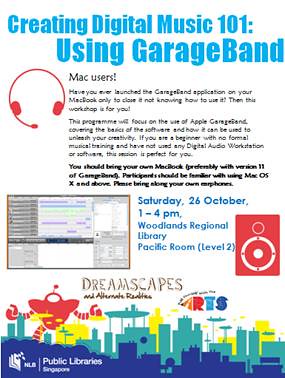
From the GoLibrary programme blurb:
Last year's workshop worked out quite well, judging from the feedback forms. That participants were totally serious about learning how to use GarageBand was something I appreciated a lot.
I felt the only hitch was that most did not have their GarageBand loops installed before they came. We'll be informing registered users ahead of time (my colleague, Galvin, would be doing that actually -- he's the unsung hero behind the sessions).
The decision to design the workshop for Mac users only was a practical one. There are several nice Digital Audio Workstation (DAW) software out there, for Windows and Macs. Just that Macs already come pre-installed with GarageBand, and quite a few people started buying Macs.
I'm looking forward to conducting the session again. One bonus is that I'll have Chinmay Pendharkar helping me at the workshop. I got to know Chinmay some years back and he's always been generous with his time in helping with Creative Commons Singapore meetups, among a lot of volunteer activities he's involved on top of his day job. I asked Chinmay if he'd like to help share his experience in producing his podcasts for Tech65. Plus, he's a trained Acoustician.
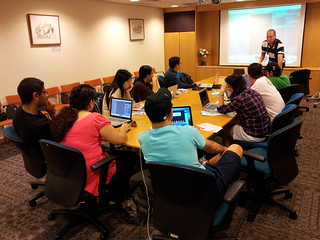
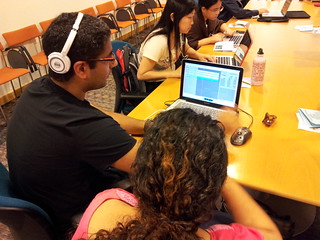
Pictures from last year's session (courtesy of Galvin Soh):
The course outline, the same as last year's, is re-posted here for ease of reference:
SCHEDULE
Hour 1: Getting to know GB; learning the basics.
Hour 2: Composing your own track/ Some ‘audio production’ tips.
Hour 3: Continue + Showcase.
The no-frills outline:
Demo of a track composed in GB - 20mins
Musical concepts - “Bars”, “patterns”, “Even counts”
Layering concept - like photoshop
Pair up - check with a “musical buddy for the day”
Opening a new GB project (file names, tempo)
The GB environment and controls
File menu, add tracks, LCD, Loops, Instruments
Shortcut Keys - Copy, Paste, Undo, Redo, Zoom in/ Out
Preferences panel
Using loops to create music - 20mins
Change tempo
Drag loops into workspace
Copy
Extend loops
Edit - Split/ cut/ copy
Layers
Instruments - 20mins
Experiment with different instruments
Musical Typing
Changing MIDI notes
Individual Track controls
Effects (“i” Edit)
Audio Production tweaks
Compressor
EQ
Export
Share
From the GoLibrary programme blurb:
This programme will focus on the use of Apple's GarageBand, covering the basics of the software and how it can be used to unleash your creativity. If you are a beginner with no formal musical training and have not used any Digital Audio Workstation or software, this session is perfect for you.
You should bring your own MacBook (preferably with version 11 of GarageBand). Participants should be familiar with using Mac OS X and above. Please bring along your own earphones.
At the end of the session, you would have gained knowledge of GarageBand and learned the rudiments of using the software to create a music track of your own composition using built-in instruments and loops.
Limited to 20 participants. The workshop is free but registration is required. Should the programme be fully registered and you would like to be placed on the waiting list, please email your name and contact number to Galvin_Soh@nlb.gov.sg with the programme title as the subject.
This programme is part of the technological arts quarter (Oct - Dec) and is brought to you by "Fill Yourself with the Arts". Look out for exciting programmes during this period on the use of technology in the arts!
About the trainer:
Mr Ivan Chew aka the “Rambling Librarian”, is a self-taught musician, amateur poet and artist, who has published five digital music albums together with his band Starfish Stories, all produced with GarageBand.
Last year's workshop worked out quite well, judging from the feedback forms. That participants were totally serious about learning how to use GarageBand was something I appreciated a lot.
I felt the only hitch was that most did not have their GarageBand loops installed before they came. We'll be informing registered users ahead of time (my colleague, Galvin, would be doing that actually -- he's the unsung hero behind the sessions).
The decision to design the workshop for Mac users only was a practical one. There are several nice Digital Audio Workstation (DAW) software out there, for Windows and Macs. Just that Macs already come pre-installed with GarageBand, and quite a few people started buying Macs.
I'm looking forward to conducting the session again. One bonus is that I'll have Chinmay Pendharkar helping me at the workshop. I got to know Chinmay some years back and he's always been generous with his time in helping with Creative Commons Singapore meetups, among a lot of volunteer activities he's involved on top of his day job. I asked Chinmay if he'd like to help share his experience in producing his podcasts for Tech65. Plus, he's a trained Acoustician.
Pictures from last year's session (courtesy of Galvin Soh):
The course outline, the same as last year's, is re-posted here for ease of reference:
SCHEDULE
Hour 1: Getting to know GB; learning the basics.
Hour 2: Composing your own track/ Some ‘audio production’ tips.
Hour 3: Continue + Showcase.
The no-frills outline:
Demo of a track composed in GB - 20mins
Musical concepts - “Bars”, “patterns”, “Even counts”
Layering concept - like photoshop
Pair up - check with a “musical buddy for the day”
Opening a new GB project (file names, tempo)
The GB environment and controls
File menu, add tracks, LCD, Loops, Instruments
Shortcut Keys - Copy, Paste, Undo, Redo, Zoom in/ Out
Preferences panel
Using loops to create music - 20mins
Change tempo
Drag loops into workspace
Copy
Extend loops
Edit - Split/ cut/ copy
Layers
Instruments - 20mins
Experiment with different instruments
Musical Typing
Changing MIDI notes
Individual Track controls
Effects (“i” Edit)
Audio Production tweaks
Compressor
EQ
Export
Share
Sunday, September 22, 2013
Pre-release book review: Age of Context: Mobile, Sensors, Data and the Future of Privacy/ Robert Scoble & Shel Israel
It was a privilege to be able to review a pre-release copy of Scoble's and Israel's latest book, Age of Context (AoC).


Age of Context: Mobile, Sensors, Data and the Future of Privacy
This was what I posted at Amazon.com, leaving in an extra part that I edited out from the Amazon.com post:
Reading this book was like reading about technological possibilities in Scifi stories. Except, the technologies are already here and in use. By millions of people like us.
I reviewed a pre-release copy of the book, at a time where my mind was distacted by other stuff. Tackling over 270 pages of text wasn't at the top of my list. I was worried I wouldn't be able to read this carefully and give this a fair review. But I need not have worried.
Scoble and Israel did not just write a book. They told stories. That's what I liked about this one. The opening chapter has a title "Storm's Coming". It sets the tone that this book unabashedly seeks to entertain and inform.
A quote from their opening chapter: "Our perfect storm is composed not of three forces, but five, and they are technological rather than meteorological: mobile devices, social media, big data, sensors and location-based services."
Smart homes and apartments, smart appliances; contextual, wearable systems that know our location, our current activities, our up-to-date preferences. Personal Contextual Assistants (PCAs) that, less than a decade ago, we would call it them the stuff of Scifi and Fantasy magazines.
That quote from the opening chapter made me wonder, at first, if I would learn anything new. None of those terms were new to me, since I read a fair bit of Science fact and fiction. Besides, we already have our Apples and Samsungs. We are no strangers to wearing computing devices on us. So what would be new to me?
Quite a bit.
For example, I now see Map apps with greater insights now. Specifically, the motivations behind companies like Google and Apple in developing map services. And what is needed to make such services and apps work.
One chapter discussed what the convergence will mean in terms of business and marketing. It suggests that the real business application would be in information arbitrage; micro-commissions for making real-time, context-specific business referrals to customers.
Like the Scifi stories that I enjoy, Scoble and Israel are able to make me relate to how individuals and society reacts to, or are being affected by technology, consciously or otherwise.
For example, most people will choose to drive the car themselves, even when they know the machine can execute instructions with greater precision and efficiency. Or the discomfort some individuals feel after discovering how third-party services have decided, without their permissions, to share personal information -- even if that sharing appears to be benign.
The book comes across as a result of "pragmatic field research", presenting information and facts not in empirical terms but as stories. There are real names of companies and individuals. Some chapters go deep into the subject, while some chapters profiled an overview of the technologies and companies. I liked that alternating treatment, between depth and breadth.
While the authors do not hide their bias towards the benefits that this convergence offers, they are not blind to potential pitfalls. The final chapter talks about how the companies, covered in the book, deal with personal data they collect. The authors talk about what they call "the sneaky stuff".
Overall, the authors seek to assure readers that 'the storm is coming' but we're not entirely helpless.
"We hope you can use this book as a framework to understand the contextual developments that will take place over the next few years. We hope you take it in context and that it will help you adjust to the changes in your work and your life."
I think this book would enable readers to have a greater awareness of what is happening the next time we receive alerts or recommendations from companies, or from our social networks, or when we use apps. Not that the companies are trying to be insidious (though one would have a greater awareness of how they could be). It is always useful to know how things work. When things break, we might be better prepared for it or at least understand why.
I enjoyed the overview and insights to technologies being developed in the USA, which will inevitably spill over to the rest of the world. A few were obvious to me while a large number were not.
The writing is crisp and the pages flow. The writing style reminded me of magazine articles like Nature, and Popular Mechanics: informative, entertaining, and accessible without dumbing down.
Age of Context: Mobile, Sensors, Data and the Future of Privacy
This was what I posted at Amazon.com, leaving in an extra part that I edited out from the Amazon.com post:
Reading this book was like reading about technological possibilities in Scifi stories. Except, the technologies are already here and in use. By millions of people like us.
I reviewed a pre-release copy of the book, at a time where my mind was distacted by other stuff. Tackling over 270 pages of text wasn't at the top of my list. I was worried I wouldn't be able to read this carefully and give this a fair review. But I need not have worried.
Scoble and Israel did not just write a book. They told stories. That's what I liked about this one. The opening chapter has a title "Storm's Coming". It sets the tone that this book unabashedly seeks to entertain and inform.
A quote from their opening chapter: "Our perfect storm is composed not of three forces, but five, and they are technological rather than meteorological: mobile devices, social media, big data, sensors and location-based services."
Smart homes and apartments, smart appliances; contextual, wearable systems that know our location, our current activities, our up-to-date preferences. Personal Contextual Assistants (PCAs) that, less than a decade ago, we would call it them the stuff of Scifi and Fantasy magazines.
Google Glass - how it works (but it stopped short of describing why some people feel that it works).
How one NFL football team/ stadium is progressively implementing tech & data to anticipate customer purchase behavior. Save time for customer, faster sales, superior customer experience.
These tech combos work, because we are creatures of habit.
How a company like VinTank harnesses and analyses data from social media conversations to identify high value consumers. Using data for its own target marketing.
Data from not just buying or consuming but merely showing an interest it, like touching/ viewing something.
The automobile as a AoC device.
How some branches of government are utilizing data, computer simulations, visualization technologies/ 3D models to increase the level of engagement with citizens.
A sand grain-sized sensor the works with a skin patch to monitor the patient's condition.
That quote from the opening chapter made me wonder, at first, if I would learn anything new. None of those terms were new to me, since I read a fair bit of Science fact and fiction. Besides, we already have our Apples and Samsungs. We are no strangers to wearing computing devices on us. So what would be new to me?
Quite a bit.
For example, I now see Map apps with greater insights now. Specifically, the motivations behind companies like Google and Apple in developing map services. And what is needed to make such services and apps work.
One chapter discussed what the convergence will mean in terms of business and marketing. It suggests that the real business application would be in information arbitrage; micro-commissions for making real-time, context-specific business referrals to customers.
Like the Scifi stories that I enjoy, Scoble and Israel are able to make me relate to how individuals and society reacts to, or are being affected by technology, consciously or otherwise.
For example, most people will choose to drive the car themselves, even when they know the machine can execute instructions with greater precision and efficiency. Or the discomfort some individuals feel after discovering how third-party services have decided, without their permissions, to share personal information -- even if that sharing appears to be benign.
The book comes across as a result of "pragmatic field research", presenting information and facts not in empirical terms but as stories. There are real names of companies and individuals. Some chapters go deep into the subject, while some chapters profiled an overview of the technologies and companies. I liked that alternating treatment, between depth and breadth.
While the authors do not hide their bias towards the benefits that this convergence offers, they are not blind to potential pitfalls. The final chapter talks about how the companies, covered in the book, deal with personal data they collect. The authors talk about what they call "the sneaky stuff".
Overall, the authors seek to assure readers that 'the storm is coming' but we're not entirely helpless.
"We hope you can use this book as a framework to understand the contextual developments that will take place over the next few years. We hope you take it in context and that it will help you adjust to the changes in your work and your life."
I think this book would enable readers to have a greater awareness of what is happening the next time we receive alerts or recommendations from companies, or from our social networks, or when we use apps. Not that the companies are trying to be insidious (though one would have a greater awareness of how they could be). It is always useful to know how things work. When things break, we might be better prepared for it or at least understand why.
I enjoyed the overview and insights to technologies being developed in the USA, which will inevitably spill over to the rest of the world. A few were obvious to me while a large number were not.
The writing is crisp and the pages flow. The writing style reminded me of magazine articles like Nature, and Popular Mechanics: informative, entertaining, and accessible without dumbing down.
Tuesday, September 10, 2013
Interview with Singapore Indie band, Pitch Feather (Part 2)
[From Part 1]
[RL] I don't know of any other SG musicians who've done any "how to" videos. Are there more tutorials like this that the band plan to release?
[PF] We might, but no promises. =P
How To Write A Song from Pitch Feather on Vimeo
*
[RL] Says here you're a freelance recording artist since 2007 So you didn't just "pop out" on the music scene here, obviously. Have you always wanted to be a singer?
[PF] Yes! Since young, I always fantasized about being the lead singer of a band. I think I have found my voice in singing, and I feel that I’m able to express myself fully through music. Singing is like an emotional outlet for me. I’m quite a reserved person by nature, but singing allows me to be anybody I want to be for that moment.
*
[RL] And you have a bakery. Is that your day job of sorts?
[PF] You can say it’s my day job. I started Yoke Bakery about 4 years ago after I quitted my desk bound graphic design job. I didn't want to waste any of my youth. Being able to plan my own time gave me flexibility to pursue my dreams.
*
[RL] You're trained as a graphic designer? Will you be doing your album illustrations? Do you have your visual art portfolio where we can take a glimpse?
[PF] Yup, I’ll be designing our album art. In fact, some of the photographs you will see in the album are actually taken from my travels with Chuan, which made it extra meaningful.
I do not have an online design portfolio; I’ve been inactive in the design world for quite a while now. Maybe I should get back to painting or something.
*
[RL] This FB post was interesting (some one posted a fan art). What's the best thing any fan has said/ written to you?
[PF] One of our very supportive fan shared on Facebook that “Each song is a treasure. Each song has its own charm and irresistible draw to listen again. Pitch Feather is a band of musical depth and talent that you don't find very often.” That made me cry.
*
[RL] Can you give your fans a glimpse of what songs the album would have? Please tell me Lonely Ivory Tower and Painter's Symphony will be in!
[PF] It will be a 12 track full length album. So most of the original songs we have soft-released on SoundCloud will be included (of course Lonely Ivory Tower and Painter’s Symphony will be in :)
There will be 2 brand new songs in the album that you have not heard, so do stay tuned!
*
[RL] As I listened and read the blurb of Dear Jake, I thought, "Let's do a reverse and have Pitch Feather talk about your friends". Tell us about the friends/ family/ strangers -- anyone -- you'd like to share, memorable people whom you've encountered in your musical journey.
[PF] Along our musical journey, we have collaborated with 4 guitarists in the making of this album. They have been really kind to offer their help and artistic input. It was great fun working with all of them. Each of them have a distinct style, so this album is really diverse - a mixture of different styles, and we’re really proud of it.
*
[RL] You issued a call for guitarists. How did that turn out? (I would have responded but my 'live' guitar skills are pretty sucky)
[PF] The response was really good. We had a few guitarist recommendations and eventually had the opportunity to work with Daniel Sassoon (his wife referred him haha!).
*
[RL] You mentioned that "the ride was rather bumpy" in producing Pitch Feather's debut album. How bumpy exactly?
[PF] As you might already know, Pitch Feather is mainly driven by Chuan and me. We both have to juggle running our small businesses and producing our debut album. Music is very important to the both of us, and self-producing our album is number 1 on my bucket list.
It is hard work handling almost every aspect of the musical project ourselves, from composing to recording to mixing to designing the album art and website etc. Setbacks along the way are inevitable. We try to make each of our creative output as good as possible, and sometimes that resulted in sleepless nights.
This debut album is very special because we put our hearts, blood, tears and souls into it. Also, I'm super grateful for supportive friends who have helped us along the way.
*
[RL] How old are the three of you?
[PF] I’m 26, Chuan and Hongliang are 30.
*
[RL] Soundbites from the three of you? Well, the 2 guys anyway.
[PF] “Hi Ivan, thanks for doing the interview! Let’s meet up for coffee one day ;)” – Chuan
*
[RL] What's the most romantic thing Chuan has done for you? :)
[PF] He cooked porridge for me when I fell ill, if you consider that as romantic. Haha! He is a down-to-earth guy and shows his love through his caring ways. And that’s what I like about him. I value sincerity a lot.
*
[RL] Finally, what other things would you like to add here?
[PF] Thank you so much for this fun interview! It’s always nice to do interviews as I think they are great for self-reflection. Sometimes I can get so caught up with my goals that I forget to stop and enjoy all the things I have accomplished so far.
*
[RL] Lastly, a fact check: do I credit Pitch Feather as follows?
[PF] You can address Pitch Feather as just Alberta, Chuan and Hongliang for now. We are trying to shake off the “roles”. Being in a DIY band is pretty much being versatile – we fill in any gaps however and whenever we can. It’s important, almost necessary, to be multi-talented multi-instrumentalists. :)
*
[Ivan here] Wow, what was I doing at 26 and 30? Definitely not running my own business, let alone do that and self-produce a music album. Pitch Feather is a really talented bunch of folks. I enjoyed doing that little bit of research on the band, and especially enjoyed the smart responses from Alberta.
As I'm tidying up this blog post, the band has been off to Brisbane, Australia, to master their album.
Look forward to buying their album when it's out soon.
Go visit their official band website.
[RL] I don't know of any other SG musicians who've done any "how to" videos. Are there more tutorials like this that the band plan to release?
[PF] We might, but no promises. =P
How To Write A Song from Pitch Feather on Vimeo
*
[RL] Says here you're a freelance recording artist since 2007 So you didn't just "pop out" on the music scene here, obviously. Have you always wanted to be a singer?
[PF] Yes! Since young, I always fantasized about being the lead singer of a band. I think I have found my voice in singing, and I feel that I’m able to express myself fully through music. Singing is like an emotional outlet for me. I’m quite a reserved person by nature, but singing allows me to be anybody I want to be for that moment.
*
[RL] And you have a bakery. Is that your day job of sorts?
[PF] You can say it’s my day job. I started Yoke Bakery about 4 years ago after I quitted my desk bound graphic design job. I didn't want to waste any of my youth. Being able to plan my own time gave me flexibility to pursue my dreams.
*
[RL] You're trained as a graphic designer? Will you be doing your album illustrations? Do you have your visual art portfolio where we can take a glimpse?
[PF] Yup, I’ll be designing our album art. In fact, some of the photographs you will see in the album are actually taken from my travels with Chuan, which made it extra meaningful.
I do not have an online design portfolio; I’ve been inactive in the design world for quite a while now. Maybe I should get back to painting or something.
*
[RL] This FB post was interesting (some one posted a fan art). What's the best thing any fan has said/ written to you?
[PF] One of our very supportive fan shared on Facebook that “Each song is a treasure. Each song has its own charm and irresistible draw to listen again. Pitch Feather is a band of musical depth and talent that you don't find very often.” That made me cry.
*
[RL] Can you give your fans a glimpse of what songs the album would have? Please tell me Lonely Ivory Tower and Painter's Symphony will be in!
[PF] It will be a 12 track full length album. So most of the original songs we have soft-released on SoundCloud will be included (of course Lonely Ivory Tower and Painter’s Symphony will be in :)
There will be 2 brand new songs in the album that you have not heard, so do stay tuned!
*
[RL] As I listened and read the blurb of Dear Jake, I thought, "Let's do a reverse and have Pitch Feather talk about your friends". Tell us about the friends/ family/ strangers -- anyone -- you'd like to share, memorable people whom you've encountered in your musical journey.
[PF] Along our musical journey, we have collaborated with 4 guitarists in the making of this album. They have been really kind to offer their help and artistic input. It was great fun working with all of them. Each of them have a distinct style, so this album is really diverse - a mixture of different styles, and we’re really proud of it.
*
[RL] You issued a call for guitarists. How did that turn out? (I would have responded but my 'live' guitar skills are pretty sucky)
[PF] The response was really good. We had a few guitarist recommendations and eventually had the opportunity to work with Daniel Sassoon (his wife referred him haha!).
*
[RL] You mentioned that "the ride was rather bumpy" in producing Pitch Feather's debut album. How bumpy exactly?
[PF] As you might already know, Pitch Feather is mainly driven by Chuan and me. We both have to juggle running our small businesses and producing our debut album. Music is very important to the both of us, and self-producing our album is number 1 on my bucket list.
It is hard work handling almost every aspect of the musical project ourselves, from composing to recording to mixing to designing the album art and website etc. Setbacks along the way are inevitable. We try to make each of our creative output as good as possible, and sometimes that resulted in sleepless nights.
This debut album is very special because we put our hearts, blood, tears and souls into it. Also, I'm super grateful for supportive friends who have helped us along the way.
*
[RL] How old are the three of you?
[PF] I’m 26, Chuan and Hongliang are 30.
*
[RL] Soundbites from the three of you? Well, the 2 guys anyway.
[PF] “Hi Ivan, thanks for doing the interview! Let’s meet up for coffee one day ;)” – Chuan
*
[RL] What's the most romantic thing Chuan has done for you? :)
[PF] He cooked porridge for me when I fell ill, if you consider that as romantic. Haha! He is a down-to-earth guy and shows his love through his caring ways. And that’s what I like about him. I value sincerity a lot.
*
[RL] Finally, what other things would you like to add here?
[PF] Thank you so much for this fun interview! It’s always nice to do interviews as I think they are great for self-reflection. Sometimes I can get so caught up with my goals that I forget to stop and enjoy all the things I have accomplished so far.
*
[RL] Lastly, a fact check: do I credit Pitch Feather as follows?
- Alberta – Vocals, Keyboards, Melodica
- Chuan – Basses, Guitars, Backing Vocals
- Hongliang – Drums, Percussions
[PF] You can address Pitch Feather as just Alberta, Chuan and Hongliang for now. We are trying to shake off the “roles”. Being in a DIY band is pretty much being versatile – we fill in any gaps however and whenever we can. It’s important, almost necessary, to be multi-talented multi-instrumentalists. :)
*
[Ivan here] Wow, what was I doing at 26 and 30? Definitely not running my own business, let alone do that and self-produce a music album. Pitch Feather is a really talented bunch of folks. I enjoyed doing that little bit of research on the band, and especially enjoyed the smart responses from Alberta.
As I'm tidying up this blog post, the band has been off to Brisbane, Australia, to master their album.
Look forward to buying their album when it's out soon.
Go visit their official band website.
Interview with Singapore Indie band, Pitch Feather (Part 1)
I've been following a Singapore Indie band, Pitch Feather, on SoundCloud and FaceBook soon after they made their presence known in the Internet in late 2012. You might have heard of them too, when their remix of the 2013 NDP song went viral and busted their soundcloud download limit.
A few weeks ago, I got in touch with them (their lead singer, specifically) on Twitter. They were game to do an email interview.
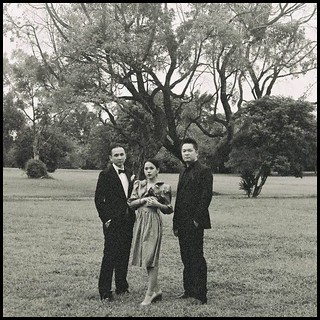
All Rights Reserved. Pitch Feather.
I looked around the Internet to see what I can find about the band. It was soon obvious to me the band had been busy experimenting and planting themselves online (some of the social sharing platforms were new to me).
Here's what I found: MySpace | SoundClick | SoundCloud | FreeMusicArchive | Undergroundmusic | Reverbnation | Twitter | BandCamp | HeartthrobProject | LastFM | Beat100 | Soft.com | BandSoup | YouTube
Get them a Wikipedia page to complete the list!
These earlier interviews have already covered their origins: 5minutemusic.com | Pandarocketship.com | SEAindie | moshinmag.sg. Rather than cover old ground, I thought to find out more of the personalities behind the band. I had more than 20 questions. Their lead singer, Alberta, was nice enough to answer almost all.
Here's Part 1:
[Rambling Librarian = RL]
[Pitch Feather = PF, answered by Alberta]
*
[RL] Let me state what I found from your Facebook Page and published interviews:
Question: why The Eggheads?
[PF] That was ages ago and I can’t exactly recall why we chose that name then. But I do vaguely remember having a requirement of having “The” in the band name because we wanted a name in that vein – we loved bands like The Beatles, The Cardigans, The Eagles, The Smashing Pumpkins. It was cool. As for “Eggheads”, I think maybe we were trying to be comical. Haha!
*
[RL] Looking at past interviews, relatively little was mentioned about the band's origin, way back to The Eggheads. So how did the three of you meet? And how did you end up forming The Eggheads?
[PF] Chuan and I met about 7 years ago through a casual jam session with mutual friends. One day, the both of us decided to form a cover band for fun, so we pulled in our guitarist friend, Roy Soh (whom we also collaborated with for two of our current original tracks - “Usual Day” and “Lonely Ivory Tower") and Hongliang on drums, who was Chuan’s friend from their teenage school days. For a short period of time, Hongliang’s then and now girlfriend, Ccube, stood in as our keyboardist.
*
[RL] How the three of you got into the music scene back then, i.e. a band playing covers. Could you do a little reminiscing about the good old days?
[PF] We were not very active in playing gigs. We wouldn't consider ourselves to be deep in the local music scene, although we did perform at random events when opportunities came. They were mostly school organised events (Hongliang was from NTU’s hall band community, so he had quite a lot of lobangs).
I remember we had the chance to perform at The Army Half Marathon. Performing in front of marathon runners was quite refreshing.
The most memorial gig we had as The Eggheads was probably at Home Club -– the legendary Joe Ng invited us over. The main highlight of that gig was a closing Metal Medley we put together, and the crowd loved it. Sweet memories.
*
[RL] What's the musical background, including mixing and sound engineering, for Pitch Feather? Any formal musical training etc.?
[PF] I’m mainly a self taught singer-songwriter. I have close to zero formal music training. At 15 I bought myself an acoustic guitar and attended a brief beginner’s guitar course that only taught basic chords, instead of music theory and individual notes.
If you talk to me about music theory, I won’t be able to say very much, to be honest. I do think theory comes in very useful when communicating ideas with musicians, and I'm still learning by the day.
Regardless, I don’t think anyone needs to be a theory expert to write good songs. Most of my musical know-how comes from feeling and intuition, probably a result of me intently listening to and studying music albums that I like since young.
Chuan’s the main guy behind the mixing knobs. You can say he’s the most technical one among us. He didn't have much formal training in music too, but his hunger for knowledge is incredible. He reads about music theory and production techniques a lot, and I give him a lot of credit for making the songs come alive. Of course, the production is still a joint effort and we still contribute ideas and comments to the mix.
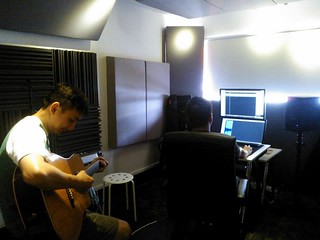
All Rights Reserved. Pitch Feather.
*
[RL] Chuan wrote about the motivations for your adaptation of the NDP 2013 theme song. I thought it was fantastic publicity for Pitch Feather. You were featured at NewNation, mentioned at blogs like this one, even maxing out your Soundcloud download limit. What do you recall of that little episode? Did you get a sense there was a jump in the number of new fans/ mailing list subscribers?
[PF] We were really excited to see an overwhelming response to our cover. And yeah, we did gain some new fans from it, which was encouraging.
*
[RL] Did the guys appoint you as the social media manager? :) Does Pitch Feather have a social media strategy of sorts? How has the experience been, managing so many accounts, responding to fans etc.
[PF] No, actually we each have our own roles to play. For example, I manage our Twitter and SoundCloud accounts and Facebook is managed mainly by Chuan. There are no strict boundaries, though. Each one of us is free to participate in any way we like – especially on Facebook where everyone has an account. We try to engage our follower/fans as much as we can.
[NOTE: RL - Pitch Feather is very prolific on the Internet and music social media sites, as far as I can tell. A Google keyword search for "Pitchfeather" showed like a ton of stuff about your band, I went as far as 40 search results listings and stopped there. Wouldn't be surprised if there were more.]
*
[RL] Your track, Jolly Old St Nick, seem to be your first Creative Commons licensed track (I blogged about it, here) Prior to this, you've had four All Rights Reserved tracks on your SoundCloud page. What's your approach/ thinking behind licensing your music online? Or specifically, would you adopt CC licenses as a way forward? Your thoughts?
[PF] I think CC licenses are great, and we’d try to adopt CC whenever we can. For our originals, right now we still consider them to be “in production”, and wouldn't really want people to make remixes or go spread them around.
In fact, even after the songs are fully mastered and finished with production, we’d have to consider carefully we want people freely download and share, so the songs from the album are probably going to be All Rights Reserved all the way. Regardless, we still like the CC licensing system, and would try to use it whenever we can.
*
[RL] Says here you're coding your own mailing list. Who's the IT geek/ coder in the band?
[PF] Chuan. He was formally schooled as a computer engineer. He has a Bachelor’s degree with good honours from NUS, and runs a digital technology/marketing firm (Tech Plus Art) with a few of his friends.
*
[RL] Chuan seems to be a "closet rocker". I just had to point it out, since I'm partial to guitars and guitarists. LOL. What's the gear that Chuan uses?
[PF] Chuan’s a metal head at heart! He brings a lot of metal influences into our music, and that’s also probably why we sometimes sound a bit different from normal “pop-rock”. You can hear a lot of minor keys and some “metal” chord voicings here and there. We’re a little bit like The Cardigans (my favourite band of all-time, by the way) – a pop band with a subtle metal twist. The guitarist is a metal head as well.
By the way, those guitars in the picturebelong to the incredible, awe-inspiring Daniel Sassoon, whom we recently collaborated with for one of our more complicated songs that is yet to be released.
*
[RL] I get a sense the three of you seem rather private. Even though you're prolific in social media, it's rather "business like", focusing on the music. Comments?
[PF] Yup, you’re right, we’re rather private people. We enjoy being in our own private space, and don’t really crave public attention. Some people like to show off what they ate, what they did or saw on social media, and that’s cool, but that’s not who we are.
We’re also mindful of the fact that irrelevant postings may put people off. For the random things in life, we have our own personal social media accounts.
For Pitch Feather, we want to concentrate on sharing our musical creations and the production process. It’s a musical journey and we want our followers to be on it with us as much as possible.
*
[Read Part 2, here]
A few weeks ago, I got in touch with them (their lead singer, specifically) on Twitter. They were game to do an email interview.
All Rights Reserved. Pitch Feather.
I looked around the Internet to see what I can find about the band. It was soon obvious to me the band had been busy experimenting and planting themselves online (some of the social sharing platforms were new to me).
Here's what I found: MySpace | SoundClick | SoundCloud | FreeMusicArchive | Undergroundmusic | Reverbnation | Twitter | BandCamp | HeartthrobProject | LastFM | Beat100 | Soft.com | BandSoup | YouTube
Get them a Wikipedia page to complete the list!
These earlier interviews have already covered their origins: 5minutemusic.com | Pandarocketship.com | SEAindie | moshinmag.sg. Rather than cover old ground, I thought to find out more of the personalities behind the band. I had more than 20 questions. Their lead singer, Alberta, was nice enough to answer almost all.
Here's Part 1:
[Rambling Librarian = RL]
[Pitch Feather = PF, answered by Alberta]
*
[RL] Let me state what I found from your Facebook Page and published interviews:
- You are a 3-person band: Alberta, Chuan, Hongliang.
- Pitch Feather was formed in Nov 2011.
- “Pitch” represents your music while “Feather” symbolises freedom. Pitch Feather is the search of freedom through your musical journey.
- In the 2000s, before you were Pitch Feather, you were a band that played covers and called yourself "The Eggheads".
Question: why The Eggheads?
[PF] That was ages ago and I can’t exactly recall why we chose that name then. But I do vaguely remember having a requirement of having “The” in the band name because we wanted a name in that vein – we loved bands like The Beatles, The Cardigans, The Eagles, The Smashing Pumpkins. It was cool. As for “Eggheads”, I think maybe we were trying to be comical. Haha!
*
[RL] Looking at past interviews, relatively little was mentioned about the band's origin, way back to The Eggheads. So how did the three of you meet? And how did you end up forming The Eggheads?
[PF] Chuan and I met about 7 years ago through a casual jam session with mutual friends. One day, the both of us decided to form a cover band for fun, so we pulled in our guitarist friend, Roy Soh (whom we also collaborated with for two of our current original tracks - “Usual Day” and “Lonely Ivory Tower") and Hongliang on drums, who was Chuan’s friend from their teenage school days. For a short period of time, Hongliang’s then and now girlfriend, Ccube, stood in as our keyboardist.
*
[RL] How the three of you got into the music scene back then, i.e. a band playing covers. Could you do a little reminiscing about the good old days?
[PF] We were not very active in playing gigs. We wouldn't consider ourselves to be deep in the local music scene, although we did perform at random events when opportunities came. They were mostly school organised events (Hongliang was from NTU’s hall band community, so he had quite a lot of lobangs).
I remember we had the chance to perform at The Army Half Marathon. Performing in front of marathon runners was quite refreshing.
The most memorial gig we had as The Eggheads was probably at Home Club -– the legendary Joe Ng invited us over. The main highlight of that gig was a closing Metal Medley we put together, and the crowd loved it. Sweet memories.
*
[RL] What's the musical background, including mixing and sound engineering, for Pitch Feather? Any formal musical training etc.?
[PF] I’m mainly a self taught singer-songwriter. I have close to zero formal music training. At 15 I bought myself an acoustic guitar and attended a brief beginner’s guitar course that only taught basic chords, instead of music theory and individual notes.
If you talk to me about music theory, I won’t be able to say very much, to be honest. I do think theory comes in very useful when communicating ideas with musicians, and I'm still learning by the day.
Regardless, I don’t think anyone needs to be a theory expert to write good songs. Most of my musical know-how comes from feeling and intuition, probably a result of me intently listening to and studying music albums that I like since young.
Chuan’s the main guy behind the mixing knobs. You can say he’s the most technical one among us. He didn't have much formal training in music too, but his hunger for knowledge is incredible. He reads about music theory and production techniques a lot, and I give him a lot of credit for making the songs come alive. Of course, the production is still a joint effort and we still contribute ideas and comments to the mix.
All Rights Reserved. Pitch Feather.
*
[RL] Chuan wrote about the motivations for your adaptation of the NDP 2013 theme song. I thought it was fantastic publicity for Pitch Feather. You were featured at NewNation, mentioned at blogs like this one, even maxing out your Soundcloud download limit. What do you recall of that little episode? Did you get a sense there was a jump in the number of new fans/ mailing list subscribers?
[PF] We were really excited to see an overwhelming response to our cover. And yeah, we did gain some new fans from it, which was encouraging.
*
[RL] Did the guys appoint you as the social media manager? :) Does Pitch Feather have a social media strategy of sorts? How has the experience been, managing so many accounts, responding to fans etc.
[PF] No, actually we each have our own roles to play. For example, I manage our Twitter and SoundCloud accounts and Facebook is managed mainly by Chuan. There are no strict boundaries, though. Each one of us is free to participate in any way we like – especially on Facebook where everyone has an account. We try to engage our follower/fans as much as we can.
[NOTE: RL - Pitch Feather is very prolific on the Internet and music social media sites, as far as I can tell. A Google keyword search for "Pitchfeather" showed like a ton of stuff about your band, I went as far as 40 search results listings and stopped there. Wouldn't be surprised if there were more.]
*
[RL] Your track, Jolly Old St Nick, seem to be your first Creative Commons licensed track (I blogged about it, here) Prior to this, you've had four All Rights Reserved tracks on your SoundCloud page. What's your approach/ thinking behind licensing your music online? Or specifically, would you adopt CC licenses as a way forward? Your thoughts?
[PF] I think CC licenses are great, and we’d try to adopt CC whenever we can. For our originals, right now we still consider them to be “in production”, and wouldn't really want people to make remixes or go spread them around.
In fact, even after the songs are fully mastered and finished with production, we’d have to consider carefully we want people freely download and share, so the songs from the album are probably going to be All Rights Reserved all the way. Regardless, we still like the CC licensing system, and would try to use it whenever we can.
*
[RL] Says here you're coding your own mailing list. Who's the IT geek/ coder in the band?
[PF] Chuan. He was formally schooled as a computer engineer. He has a Bachelor’s degree with good honours from NUS, and runs a digital technology/marketing firm (Tech Plus Art) with a few of his friends.
*
[RL] Chuan seems to be a "closet rocker". I just had to point it out, since I'm partial to guitars and guitarists. LOL. What's the gear that Chuan uses?
[PF] Chuan’s a metal head at heart! He brings a lot of metal influences into our music, and that’s also probably why we sometimes sound a bit different from normal “pop-rock”. You can hear a lot of minor keys and some “metal” chord voicings here and there. We’re a little bit like The Cardigans (my favourite band of all-time, by the way) – a pop band with a subtle metal twist. The guitarist is a metal head as well.
By the way, those guitars in the picturebelong to the incredible, awe-inspiring Daniel Sassoon, whom we recently collaborated with for one of our more complicated songs that is yet to be released.
*
[RL] I get a sense the three of you seem rather private. Even though you're prolific in social media, it's rather "business like", focusing on the music. Comments?
[PF] Yup, you’re right, we’re rather private people. We enjoy being in our own private space, and don’t really crave public attention. Some people like to show off what they ate, what they did or saw on social media, and that’s cool, but that’s not who we are.
We’re also mindful of the fact that irrelevant postings may put people off. For the random things in life, we have our own personal social media accounts.
For Pitch Feather, we want to concentrate on sharing our musical creations and the production process. It’s a musical journey and we want our followers to be on it with us as much as possible.
*
[Read Part 2, here]
Sunday, August 18, 2013
IFLA 2013: "Hello, may I help you?" #wlic2013
"Where can I get spare printer cartridges?"
"It's very busy out there... I need more people."
"I'm tasked to assist the IFLA Secretary General... Nooo don't take my picture!"
"A taxi uncle brought this back. Somebody left it in his taxi" (referring to a IFLA bag)
"Where's the technician? I finally got someone to unlock the room!"
"What's your role as a volunteer?"
"I'm a maid."
"A maid?"
"I look after (an VIP delegate)."
"I'm sleepy. The delegate is sleepy..."
"Waaaah! Uuuugh!"
(Exclamations and lamentations by some volunteers when told that the opening ceremony venue looked grand; their realisation that they have to man their posts.)
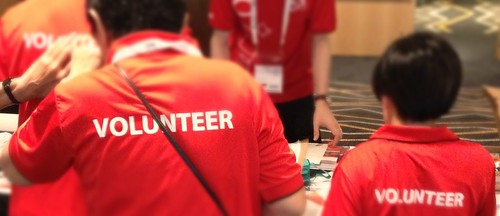
Volunteers are the lifeline of IFLA conferences.
I dropped by the secret location of the IFLA volunteer HQ (just kidding about the secret location). It's normally out of bounds for delegates but my NLB colleagues let me in.
I wanted to share a peek of what goes on behind the scenes. Obviously I'm barely scratching the surface.
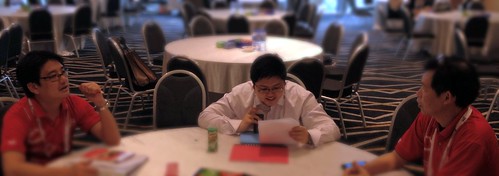
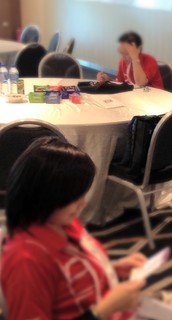
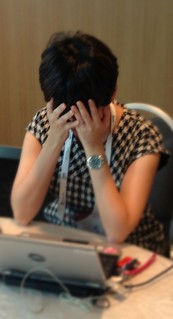
The official opening ceremony was about to start when I wrote this.
3,500 delegates from 120 countries.
I'm not sure how many volunteers were involved.
Thank you to each one of you.
"It's very busy out there... I need more people."
"I'm tasked to assist the IFLA Secretary General... Nooo don't take my picture!"
"A taxi uncle brought this back. Somebody left it in his taxi" (referring to a IFLA bag)
"Where's the technician? I finally got someone to unlock the room!"
"What's your role as a volunteer?"
"I'm a maid."
"A maid?"
"I look after (an VIP delegate)."
"I'm sleepy. The delegate is sleepy..."
"Waaaah! Uuuugh!"
(Exclamations and lamentations by some volunteers when told that the opening ceremony venue looked grand; their realisation that they have to man their posts.)
Volunteers are the lifeline of IFLA conferences.
I dropped by the secret location of the IFLA volunteer HQ (just kidding about the secret location). It's normally out of bounds for delegates but my NLB colleagues let me in.
I wanted to share a peek of what goes on behind the scenes. Obviously I'm barely scratching the surface.
The official opening ceremony was about to start when I wrote this.
3,500 delegates from 120 countries.
I'm not sure how many volunteers were involved.
Thank you to each one of you.
IFLA 2013: My Day-One #wlic2013
Registration was a breeze. I'm wasn't sure if that was a setup particular to the conference venue (Suntec Convention & Exhibition Centre). After registering, I just had one more step to do, which was to collect...
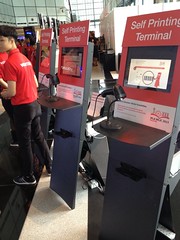

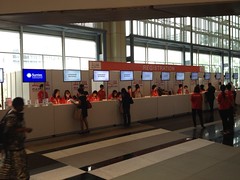
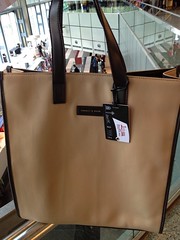
...the official conference bag. Didn't look like the typical conference bag, did it? The only outward sign was a luggage tag with the conference logo. That was removable. The bag was sponsored by a home-grown fashion company, Charles & Keith. I tweeted that it was probably the most talked-about conference bag in IFLA's history. I felt rather metrosexual carrying the bag around. Not complaining though.
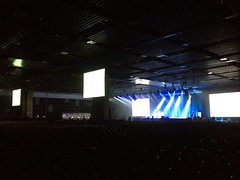
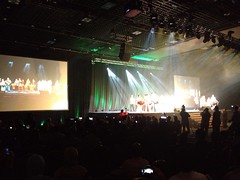
The conference venue was a large one. Had to be. We were later told there were 3,500 delegates from 120 countries attending the conference.
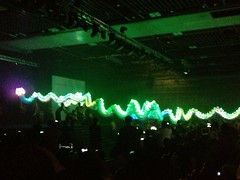
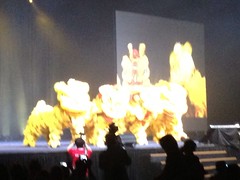
The opening ceremony opened with a Dragon Dance, featuring a souped up dragon in neon electric lights. I've seen plenty of Dragon Dances but never one with a jazzed up dragon like this. Two thumbs up.
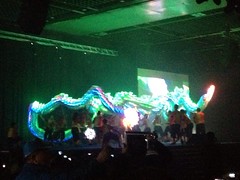
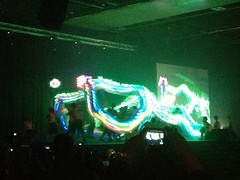
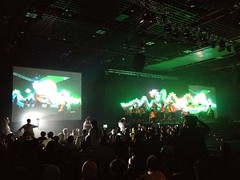

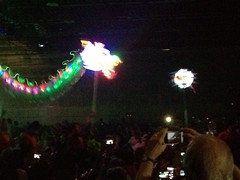
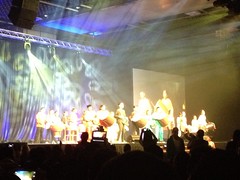
Next came a Malay-Chinese-Indian drums routine, ending with a short Lion Dance. If I was told of such a routine without having watched it, I would have thought it a cliche. But it didn't feel that way. In the context of an event involving participants from all parts of the world, such a symbolic display of racial integration was quite appropriate (it's more than mere symbolism though; go read Bertha Henson's brilliant piece on what it means to be "in Singapore").


The speeches began next.
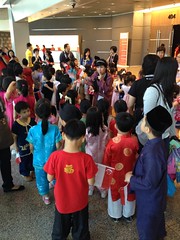
I had to step out of the for a while. Saw a group of children preparing for the next routine.

There's something special about a gathering of like-minded people. You just had to be there.
I thought the conference was off to a great start.
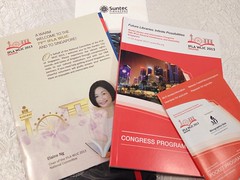
...the official conference bag. Didn't look like the typical conference bag, did it? The only outward sign was a luggage tag with the conference logo. That was removable. The bag was sponsored by a home-grown fashion company, Charles & Keith. I tweeted that it was probably the most talked-about conference bag in IFLA's history. I felt rather metrosexual carrying the bag around. Not complaining though.
The conference venue was a large one. Had to be. We were later told there were 3,500 delegates from 120 countries attending the conference.
The opening ceremony opened with a Dragon Dance, featuring a souped up dragon in neon electric lights. I've seen plenty of Dragon Dances but never one with a jazzed up dragon like this. Two thumbs up.
Next came a Malay-Chinese-Indian drums routine, ending with a short Lion Dance. If I was told of such a routine without having watched it, I would have thought it a cliche. But it didn't feel that way. In the context of an event involving participants from all parts of the world, such a symbolic display of racial integration was quite appropriate (it's more than mere symbolism though; go read Bertha Henson's brilliant piece on what it means to be "in Singapore").
The speeches began next.
I had to step out of the for a while. Saw a group of children preparing for the next routine.
There's something special about a gathering of like-minded people. You just had to be there.
I thought the conference was off to a great start.
Wednesday, August 14, 2013
IFLA 2013: Some links to help the first-time visitor to Singapore #wlic2013
The last time I blogged about IFLA 2013 was almost two years ago.
So it's finally here.
If you're like me, attending an event in an unfamiliar country, you would have questions like "How do I get around?", "Where to buy food?", "How much should I budget on a daily basis?", or "What to wear?"
And, if you also procrastinate like me, you might not bother to find out about local information until the very last minute. But then you might not do so because because your presentation is still not fully done and you're deep into panic mode LOL.
So I thought to share quick links to practical information, for the last minute prep.
General practical information
The LonelyPlanet site has practical information. I like Frommer's better, as it has more details. I didn't verify all information on prices but the amounts wouldn't change that drastically. At the very least, you should know there's a cost.
Power socket and supply
Singapore uses the 'Type G' British design. A universal adaptor socket would usually do the trick. The voltage is 220-240 volts, so you might want to check your equipment specs. Although I've never heard of any overseas visitors having their gadgets being fried by plugging in.
Internet Access
Most hotels should have WIFI. I'm not too sure if it's all free. There's always Starbucks and MacDonalds.
Maps: websites and apps
I recommend Gothere.sg. As a local, I use it myself. The site loads fast. I've found the information reliable. You can find out how to walk to places, in addition to taking the MRT system, public buses, taxis and private cars.
If you have an iPhone, you can consider the free Singapore Maps app from Apple Store.
This is the map of the MRT, i.e. public train system.
Weather
I refer to this site (from the National Environment Agency) all the time. You'll probably be staying in a hotel near the conference venue, so look for the square box that says "city".
Public toilets
Vast majority are free to use. You can find them in shopping malls. Plenty of public toilets, in reasonably clean condition, within walking distance.
Customs
I'm pretty sure librarians and information professionals will find they aren't going worry about the prohibited stuff (scroll to the bottom of this page). Information on this page, from the Singapore Customs, would also be useful.
-----
Singapore is a tourist-friendly place. I dare say most delegates can get by for the duration of the conference without too much planning. If you have your plane tickets, passport, credit card and some cash, you're good to go.
Oh, don't forget to bring a copy of your IFLA conference confirmation email. You would also have checked out the official IFLA WILC 2013 site.
The last time I attended a IFLA conference (more accurately, the IFLA World Library and Information Congress) was five years ago, in 2008. Had the privilege of attending IFLA in the years I served as the Information Officer for the Libraries for Children and Young Adults Section.
Preparing for a conference trip can often have anxiety-filled moments. I hope this post would be of some help.
See you at the conference.

So it's finally here.
If you're like me, attending an event in an unfamiliar country, you would have questions like "How do I get around?", "Where to buy food?", "How much should I budget on a daily basis?", or "What to wear?"
And, if you also procrastinate like me, you might not bother to find out about local information until the very last minute. But then you might not do so because because your presentation is still not fully done and you're deep into panic mode LOL.
So I thought to share quick links to practical information, for the last minute prep.
General practical information
The LonelyPlanet site has practical information. I like Frommer's better, as it has more details. I didn't verify all information on prices but the amounts wouldn't change that drastically. At the very least, you should know there's a cost.
Power socket and supply
Singapore uses the 'Type G' British design. A universal adaptor socket would usually do the trick. The voltage is 220-240 volts, so you might want to check your equipment specs. Although I've never heard of any overseas visitors having their gadgets being fried by plugging in.
Internet Access
Most hotels should have WIFI. I'm not too sure if it's all free. There's always Starbucks and MacDonalds.
Maps: websites and apps
I recommend Gothere.sg. As a local, I use it myself. The site loads fast. I've found the information reliable. You can find out how to walk to places, in addition to taking the MRT system, public buses, taxis and private cars.
If you have an iPhone, you can consider the free Singapore Maps app from Apple Store.
This is the map of the MRT, i.e. public train system.
Weather
I refer to this site (from the National Environment Agency) all the time. You'll probably be staying in a hotel near the conference venue, so look for the square box that says "city".
Public toilets
Vast majority are free to use. You can find them in shopping malls. Plenty of public toilets, in reasonably clean condition, within walking distance.
Customs
I'm pretty sure librarians and information professionals will find they aren't going worry about the prohibited stuff (scroll to the bottom of this page). Information on this page, from the Singapore Customs, would also be useful.
-----
Singapore is a tourist-friendly place. I dare say most delegates can get by for the duration of the conference without too much planning. If you have your plane tickets, passport, credit card and some cash, you're good to go.
Oh, don't forget to bring a copy of your IFLA conference confirmation email. You would also have checked out the official IFLA WILC 2013 site.
The last time I attended a IFLA conference (more accurately, the IFLA World Library and Information Congress) was five years ago, in 2008. Had the privilege of attending IFLA in the years I served as the Information Officer for the Libraries for Children and Young Adults Section.
Preparing for a conference trip can often have anxiety-filled moments. I hope this post would be of some help.
See you at the conference.
Subscribe to:
Posts (Atom)

